Looking for the best AI avatar generator? An AI avatar generator is software that uses machine learning to help you get more done — it can save you hours every week by automating repetitive work. Most options offer a generous free tier, with paid plans unlocking higher limits, faster processing, and team features. Whether you are a beginner or a pro, the right AI avatar generator slots into your workflow and pays for itself fast. This guide breaks down the top picks, their pros and cons, and who each one is best for.
Anthrobotics
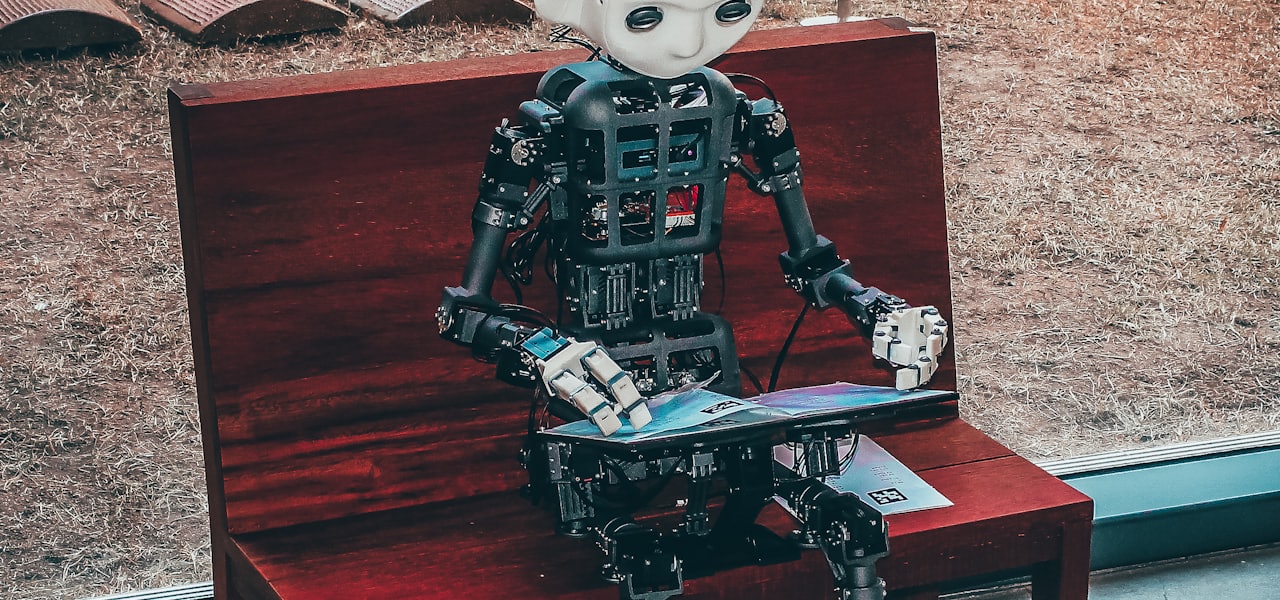
Anthrobotics is the science of developing and studying robots that are either entirely or in some way human-like. The term anthrobotics was originally coined by Mark Rosheim in a paper entitled "Design of An Omnidirectional Arm" presented at the IEEE International Conference on Robotics and Automation, May 13–18, 1990, pp. 2162–2167. Rosheim says he derived the term from "...Anthropomorphic and Robotics to distinguish the new generation of dexterous robots from its simple industrial robot forebears." The word gained wider recognition as a result of its use in the title of Rosheim's subsequent book Robot Evolution: The Development of Anthrobotics, which focussed on facsimiles of human physical and psychological skills and attributes. However, a wider definition of the term anthrobotics has been proposed, in which the meaning is derived from anthropology rather than anthropomorphic. This usage includes robots that respond to input in a human-like fashion, rather than simply mimicking human actions, thus theoretically being able to respond more flexibly or to adapt to unforeseen circumstances. This expanded definition also encompasses robots that are situated in social environments with the ability to respond to those environments appropriately, such as insect robots, robotic pets, and the like. Anthrobotics is now taught at some universities, encouraging students not only to design and build robots for environments beyond current industrial applications, but also to speculate on the future of robotics that are embedded in the world at large, as mobile phones and computers are today. In 2016 philosopher Luis de Miranda created the Anthrobotics Cluster at the University of Edinburgh "a platform of cross-disciplinary research that seeks to investigate some of the biggest questions that will need to be answered" on the relationship between humans, robots and intelligent systems and "a think tank on the social spread of robotics, and also how automation is part of the definition of what humans have always been". to explore the symbiotic relationship between humans and automated protocols.
Commission on Enhancing National Cybersecurity
The President's Commission on Enhancing National Cybersecurity is a Presidential Commission formed on April 13, 2016, to develop a plan for protecting cyberspace, and America's economic reliance on it. The commission released its final report in December 2016. The report made recommendations regarding the intertwining roles of the military, government administration and the private sector in providing cyber security. Chairman Donilon said of the report that its coverage "is unusual in the breadth of issues" with which it deals. == Recommendations == The report made sixteen major recommendations with fifty-three specific action items broadly grouped under six areas: Protecting the information and digital infrastructure Investing in the secure growth of information and digital infrastructure Consumer information access Building the cybersecurity workforce Building a secure governmental cybersecurity framework Keeping interconnectivity open, fair, competitive, and secure The Commission found that strong authentication systems were mandatory for adequate cybersecurity, not just for the government, but for all commercial systems, and private individuals. The commission also stressed remote identity proofing and security for the Internet of things (IoT). Finding that technicians who know cybersecurity and can protect systems are few and in short supply, the commission recommended nationally supported training programs to produce an adequate workforce, as well as increasing the level of expertise in the existing workforce. The Commission highlighted the importance of partnerships between government and the private sector as a powerful tool for encouraging the technology, policies and practices we need to secure and grow the digital economy. (page 2) Some criticised the commission's work as lacking an understanding of cybersecurity and not being cognizant of "cyber reality" and the cost of some of the action items, but others found the report constructive and meaningful. == Commission members == The initial members of the Commission are: Tom Donilon, former Assistant to the President and National Security Advisor (Chair) Sam Palmisano, former CEO of IBM (Vice Chair) General Keith Alexander, CEO of IronNet Cybersecurity, former Director of the National Security Agency and former Commander of U.S. Cyber Command Annie Antón, Professor and Chair of the School of Interactive Computing at Georgia Tech. Ajay Banga, President and CEO of MasterCard Steven Chabinsky, General Counsel and Chief Risk Officer of CrowdStrike Patrick Gallagher, Chancellor of the University of Pittsburgh and former Director of the National Institute of Standards and Technology Peter Lee, Corporate Vice President, Microsoft Research Herbert Lin, Senior Research Scholar for Cyber Policy and Security at the Stanford Center for International Security and Cooperation and Research Fellow at the Hoover Institution Heather Murren, former member of the Financial Crisis Inquiry Commission and co-founder of the Nevada Cancer Institute Joe Sullivan, Chief Security Officer of Uber and former Chief Security Officer of Facebook Maggie Wilderotter, Executive Chairman of Frontier Communications == Follow-on == Incoming President Trump has indicated that he wants a full review of U.S. cyber protection policy. == Notes and references ==
Cone tracing
Cone tracing and beam tracing are a derivative of the ray tracing algorithm that replaces rays, which have no thickness, with thick rays. == Principles == In ray tracing, rays are often modeled as geometric ray with no thickness to perform efficient geometric queries such as a ray-triangle intersection. From a physics of light transport point of view, however, this is an inaccurate model provided the pixel on the sensor plane has non-zero area. In the simplified pinhole camera optics model, the energy reaching the pixel comes from the integral of radiance from the solid angle by which the sensor pixel sees the scene through the pinhole at the focal plane. This yields the key notion of pixel footprint on surfaces or in the texture space, which is the back projection of the pixel on to the scene. Note that this approach can also represent a lens-based camera and thus depth of field effects, using a cone whose cross-section decreases from the lens size to zero at the focal plane, and then increases. Real optical system do not focus on exact points because of diffraction and imperfections. This can be modeled with a point spread function (PSF) weighted within a solid angle larger than the pixel. From a signal processing point of view, ignoring the point spread function and approximating the integral of radiance with a single, central sample (through a ray with no thickness) can lead to strong aliasing because the "projected geometric signal" has very high frequencies exceeding the Nyquist-Shannon maximal frequency that can be represented using the uniform pixel sampling rate. The physically based image formation model can be approximated by the convolution with the point spread function assuming the function is shift-invariant and linear. In practice, techniques such as multisample anti-aliasing estimate this cone-based model by oversampling the signal and then performing a convolution (the reconstruction filter). The backprojected cone footprint onto the scene can also be used to directly pre-filter the geometry and textures of the scene. Note that contrary to intuition, the reconstruction filter should not be the pixel footprint (as the pinhole camera model would suggest), since a box filter has poor spectral properties. Conversely, the ideal sinc function is not practical, having infinite support with possibly negative values which often creates ringing artifacts due to the Gibbs phenomenon. A Gaussian or a Lanczos filter are considered good compromises. == Computer graphics models == Cone and Beam early papers rely on different simplifications: the first considers a circular section and treats the intersection with various possible shapes. The second treats an accurate pyramidal beam through the pixel and along a complex path, but it only works for polyhedrical shapes. Cone tracing solves certain problems related to sampling and aliasing, which can plague conventional ray tracing. However, cone tracing creates a host of problems of its own. For example, just intersecting a cone with scene geometry leads to an enormous variety of possible results. For this reason, cone tracing has remained mostly unpopular. In recent years, increases in computer speed have made Monte Carlo algorithms like distributed ray tracing - i.e. stochastic explicit integration of the pixel - much more used than cone tracing because the results are exact provided enough samples are used. But the convergence is so slow that even in the context of off-line rendering a huge amount of time can be required to avoid noise. Differential cone-tracing, considering a differential angular neighborhood around a ray, avoids the complexity of exact geometry intersection but requires a LOD representation of the geometry and appearance of the objects. MIPmapping is an approximation of it limited to the integration of the surface texture within a cone footprint. Differential ray-tracing extends it to textured surfaces viewed through complex paths of cones reflected or refracted by curved surfaces. Raymarching methods over signed distance fields (SDFs) naturally allow easy use of cone-like tracing, at zero additional cost to the tracing, and both speeds up tracing and improves quality. Voxel cone tracing is a real-time algorithm that uses a hierarchical voxel representation of scene geometry, such as a sparse voxel octree, to support fast cone tracing for indirect illumination. This approach allows for the approximation of effects like glossy reflections and ambient occlusion at interactive framerates without the need for precomputation.
Scrolling
In computer displays, filmmaking, television production, video games and other kinetic displays, scrolling is sliding text, images or video across a monitor or display, vertically or horizontally. "Scrolling," as such, does not change the layout of the text or pictures but moves (pans or tilts) the user's view across what is apparently a larger image that is not wholly seen. A common television and movie special effect is to scroll credits, while leaving the background stationary. Scrolling may take place completely without user intervention (as in film credits) or, on an interactive device, be triggered by touchscreen or a keypress and continue without further intervention until a further user action, or be entirely controlled by input devices. Scrolling may take place in discrete increments (perhaps one or a few lines of text at a time), or continuously (smooth scrolling). Frame rate is the speed at which an entire image is redisplayed. It is related to scrolling in that changes to text and image position can only happen as often as the image can be redisplayed. When frame rate is a limiting factor, one smooth scrolling technique is to blur images during movement that would otherwise appear to "jump". == Computing == === Implementation === Scrolling is often carried out on a computer by the CPU (software scrolling) or by a graphics processor. Some systems feature hardware scrolling, where an image may be offset as it is displayed, without any frame buffer manipulation (see also hardware windowing). This was especially common in 8 and 16bit video game consoles. === UI paradigms === In a WIMP-style graphical user interface (GUI), user-controlled scrolling is carried out by manipulating a scrollbar with a mouse, or using keyboard shortcuts, often the arrow keys. Scrolling is often supported by text user interfaces and command line interfaces. Older computer terminals changed the entire contents of the display one screenful ("page") at a time; this paging mode requires fewer resources than scrolling. Scrolling displays often also support page mode. Typically certain keys or key combinations page up or down; on PC-compatible keyboards the page up and page down keys or the space bar are used; earlier computers often used control key combinations. Some computer mice have a scroll wheel, which scrolls the display, often vertically, when rolled; others have scroll balls or tilt wheels which allow both vertical and horizontal scrolling. Some software supports other ways of scrolling. Adobe Reader has a mode identified by a small hand icon ("hand tool") on the document, which can then be dragged by clicking on it and moving the mouse as if sliding a large sheet of paper. When this feature is implemented on a touchscreen it is called kinetic scrolling. Touch-screens often use inertial scrolling, in which the scrolling motion of an object continues in a decaying fashion after release of the touch, simulating the appearance of an object with inertia. An early implementation of such behavior was in the "Star7" PDA of Sun Microsystems ca. 1991–1992. Scrolling can be controlled in other software-dependent ways by a PC mouse. Some scroll wheels can be pressed down, functioning like a button. Depending on the software, this allows both horizontal and vertical scrolling by dragging in the direction desired; when the mouse is moved to the original position, scrolling stops. A few scroll wheels can also be tilted, scrolling horizontally in one direction until released. On touchscreen devices, scrolling is a multi-touch gesture, done by swiping a finger on the screen vertically in the direction opposite to where the user wants to scroll to. If any content is too wide to fit on a display, horizontal scrolling is required to view all of it. In applications such as graphics and spreadsheets there is often more content than can fit either the width or the height of the screen at a comfortable scale, and scrolling in both directions is necessary. === Infinite scrolling === In contrast to material divided into discrete pages, the web design approach of infinite scrolling dynamically adds new material to the user display, leading to a continuous, apparently bottomless or endless scrolling experience. === Text === In languages written horizontally, such as most Western languages, text documents longer than will fit on the screen are often displayed wrapped and sized to fit the screen width, and scrolled vertically to bring desired content into view. It is possible to display lines too long to fit the display without wrapping, scrolling horizontally to view each entire line. However, this requires inconvenient constant line-by-line scrolling, while vertical scrolling is only needed after reading a full screenful. Software such as word processors and web browsers normally uses word-wrapping to display as many words in a single line as will fit the width of the screen or window or, for text organised in columns, each column. === Demos === Scrolling texts, also referred to as scrolltexts or scrollers, played an important part in the birth of the computer demo culture. The software crackers often used their deep knowledge of computer platforms to transform the information that accompanied their releases into crack intros. The sole role of these intros was to scroll the text on the screen in an impressive way. == Film and television == Scrolling is commonly used to display the credits at the end of films and television programs. Scrolling is often used in the form of a news ticker towards the bottom of the picture for content such as television news, scrolling sideways across the screen, delivering short-form content. In the dynamic layout of kinetic typography, scrolling typography can scroll across the flat screen, or can appear to recede or advance. An iconic example is the Star Wars opening crawl inspired by the Flash Gordon serials. == Video games == In computer and video games, scrolling of a playing field allows the player to control an object in a large contiguous area. Early examples of this method include Taito's 1974 vertical-scrolling racing video game Speed Race, Sega's 1976 forward-scrolling racing games Moto-Cross (Fonz) and Road Race, and Super Bug. Previously the flip-screen method was used to indicate moving backgrounds. The Namco Galaxian arcade system board introduced with Galaxian in 1979 pioneered a sprite system that animated pre-loaded sprites over a scrolling background, which became the basis for Nintendo's Radar Scope and Donkey Kong arcade hardware and home consoles such as the Nintendo Entertainment System. Parallax scrolling, which was first featured in Moon Patrol, involves several semi-transparent layers (called playfields), which scroll on top of each other at varying rates in order to give an early pseudo-3D illusion of depth. Belt scrolling is a method used in side-scrolling beat 'em up games with a downward camera angle where players can move up and down in addition to left and right. == Studies == A 1993 article by George Fitzmaurice studied spatially aware palmtop computers. These devices had a 3D sensor, and moving the device caused the contents to move as if the contents were fixed in place. This interaction could be referred to as “moving to scroll.” Also, if the user moved the device away from their body, they would zoom in; conversely, the device would zoom out if the user pulled the device closer to them. Smartphone cameras and “optical flow” image analysis utilize this technique nowadays. A 1996 research paper by Jun Rekimoto analyzed tilting operations as scrolling techniques on small screen interfaces. Users could not only tilt to scroll, but also tilt to select menu items. These techniques proved especially useful for field workers, since they only needed to hold and control the device with one hand. A study from 2013 by Selina Sharmin, Oleg Špakov, and Kari-Jouko Räihä explored the action of reading text on a screen while the text auto-scrolls based on the user's eye tracking patterns. The control group simply read text on a screen and manually scrolled. The study found that participants preferred to read primarily at the top of the screen, so the screen scrolled down whenever participants’ eyes began to look toward the bottom of the screen. This auto-scrolling caused no statistically significant difference in reading speed or performance. An undated study occurring during or after 2010 by Dede Frederick, James Mohler, Mihaela Vorvoreanu, and Ronald Glotzbach noted that parallax scrolling "may cause certain people to experience nausea."
Dynamic texture
Dynamic texture ( sometimes referred to as temporal texture) is the texture with motion which can be found in videos of sea-waves, fire, smoke, wavy trees, etc. Dynamic texture has a spatially repetitive pattern with time-varying visual pattern. Modeling and analyzing dynamic texture is a topic of images processing and pattern recognition in computer vision. Extracting features that describe the dynamic texture can be utilized for tasks of images sequences classification, segmentation, recognition and retrieval. Comparing with texture found within static images, analyzing dynamic texture is a challenging problem. It is important that the extracted features from dynamic texture combine motion and appearance description, and also be invariance to some transformation such as rotation, translation and illumination. == Analysis methods of dynamic texture == The methods of dynamic texture recognition can categorized as follows: Methods based on optical flow: by applying optical flow to the dynamic texture, velocity with direction and magnitude can be detected and used to recognize the dynamic texture. Due to simplicity of its computation, it is currently the most popular method. Methods computing geometric properties: this methods track the surfaces of motion trajectories in spatiotemporal domain. Methods based on local spatiotemporal filtering : this methods analyze the local spatiotemporal patterns and its orientation and energy and employ them as feature used for classification. Methods based on global spatiotemporal transform: this method characterize the motion at different scale using wavelets that can decompose the motion into local and global. Model-based methods : These methods aims at generating a model to describe the motion by a set of parameters. == Applications == - Segmenting the sequence images of natural scenes. This helps on differentiate between streets and grass alongside these streets which could be used in the application of navigations. - Motion detection : Dynamic texture features extracted from footage videos can be exploited to detect abnormal crowd activities. - Video classification: video of natural scenes or other scenes that exhibit dynamic textures. - Video retrieval : Dynamic textures can be employed as a feature retrieve videos that contain, for example, sea-waves, smoke, clouds, wavy trees.
Paprika (app)
Paprika is an app and website that helps users organize recipes, produce meal plans, and create grocery lists. The app is available for Android, iOS, macOS, and Windows devices. == Overview == The app allows users to import recipes from various sources, including websites and other apps. The app also allows users to automatically generate meal plans, which are also customizable, in order to achieve specific objectives such as weight loss, muscle gain, adherence to various dietary preferences, or personal taste. The app is also capable of generating grocery lists based on the daily or weekly meal plans chosen by the user. All the recipes, menus, and grocery lists of each user are accessible from smartphones, tablets, and computers. The app is part of a broader category of mobile apps focused on meal planning, recipe management, and shopping list automation, which have grown in popularity with the expansion of smartphone usage and digital cooking tools. == History == Paprika Recipe Manager for iPad version 1.0 was initially released in September 2010 by Hindsight LLC. Paprika 2.0 was released for iPhone and iPad in November 2013, and Paprika 3.0 was released for iOS and macOS in November 2017. == Reception == Paprika has been featured in technology and lifestyle publications as a recipe management and meal planning application. Coverage has noted features such as importing recipes from websites, ingredient scaling, and cross-platform synchronization. The app has also appeared in lists of cooking and meal planning tools published by outlets including The Verge and The Kitchn.