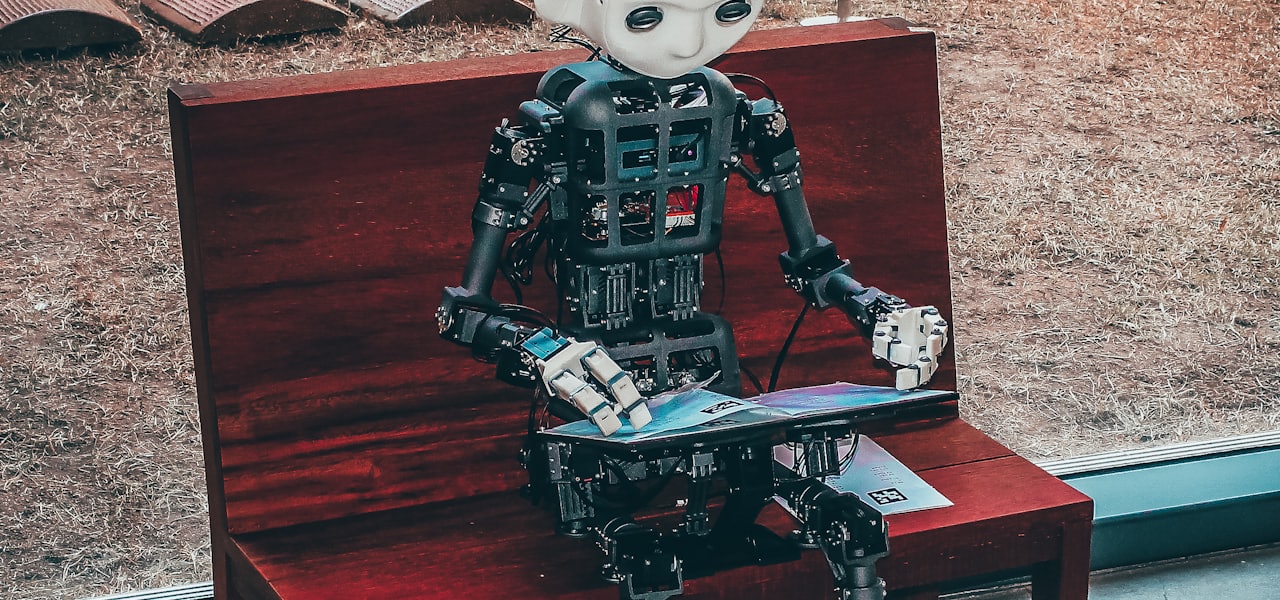
Problem solving is the process of achieving a goal by overcoming obstacles, a frequent part of most activities. Problems in need of solutions range from simple personal tasks (e.g. how to get from point A to B) to complex issues in business and technical fields. The former is an example of simple problem solving (SPS) addressing one issue, whereas the latter is complex problem solving (CPS) with multiple interrelated obstacles. Another classification of problem-solving tasks is into well-defined problems with specific obstacles and goals, and ill-defined problems in which the current situation is troublesome but it is not clear what kind of resolution to aim for. Similarly, one may distinguish formal or fact-based problems requiring psychometric intelligence, versus socio-emotional problems which depend on the changeable emotions of individuals or groups, such as tactful behavior, fashion, or gift choices. Solutions require sufficient resources and knowledge to attain the goal. Professionals such as lawyers, doctors, programmers, and consultants are largely problem solvers for issues that require technical skills and knowledge beyond general competence. Many businesses have found profitable markets by recognizing a problem and creating a solution: the more widespread and inconvenient the problem, the greater the opportunity to develop a scalable solution. There are many specialized problem-solving techniques and methods in fields such as science, engineering, business, medicine, mathematics, computer science, philosophy, and social organization. The mental techniques to identify, analyze, and solve problems are studied in psychology and cognitive sciences. Also widely researched are the mental obstacles that prevent people from finding solutions; problem-solving impediments include confirmation bias, mental set, and functional fixedness. == Definition == The term problem solving has a slightly different meaning depending on the discipline. For instance, it is a mental process in psychology and a computerized process in computer science. There are two different types of problems: ill-defined and well-defined; different approaches are used for each. Well-defined problems have specific end goals and clearly expected solutions, while ill-defined problems do not. Well-defined problems allow for more initial planning than ill-defined problems. Solving problems sometimes involves dealing with pragmatics (the way that context contributes to meaning) and semantics (the interpretation of the problem). The ability to understand what the end goal of the problem is, and what rules could be applied, represents the key to solving the problem. Sometimes a problem requires abstract thinking or coming up with a creative solution. Problem solving has two major domains: mathematical problem solving and personal problem solving. Each concerns some difficulty or barrier that is encountered. === Psychology === Problem solving in psychology refers to the process of finding solutions to problems encountered in life. Solutions to these problems are usually situation- or context-specific. The process starts with problem finding and problem shaping, in which the problem is discovered and simplified. The next step is to generate possible solutions and evaluate them. Finally a solution is selected to be implemented and verified. Problems have an end goal to be reached; how you get there depends upon problem orientation (problem-solving coping style and skills) and systematic analysis. Mental health professionals study the human problem-solving processes using methods such as introspection, behaviorism, simulation, computer modeling, and experiment. Social psychologists look into the person-environment relationship aspect of the problem and independent and interdependent problem-solving methods. Problem solving has been defined as a higher-order cognitive process and intellectual function that requires the modulation and control of more routine or fundamental skills. Empirical research shows many different strategies and factors influence everyday problem solving. Rehabilitation psychologists studying people with frontal lobe injuries have found that deficits in emotional control and reasoning can be re-mediated with effective rehabilitation and could improve the capacity of injured persons to resolve everyday problems. Interpersonal everyday problem solving is dependent upon personal motivational and contextual components. One such component is the emotional valence of "real-world" problems, which can either impede or aid problem-solving performance. Researchers have focused on the role of emotions in problem solving, demonstrating that poor emotional control can disrupt focus on the target task, impede problem resolution, and lead to negative outcomes such as fatigue, depression, and inertia. In conceptualization,human problem solving consists of two related processes: problem orientation, and the motivational/attitudinal/affective approach to problematic situations and problem-solving skills. People's strategies cohere with their goals and stem from the process of comparing oneself with others. === Cognitive sciences === Among the first experimental psychologists to study problem solving were the Gestaltists in Germany, such as Karl Duncker in The Psychology of Productive Thinking (1935). Perhaps best known is the work of Allen Newell and Herbert A. Simon. Experiments in the 1960s and early 1970s asked participants to solve relatively simple, well-defined, but not previously seen laboratory tasks. These simple problems, such as the Tower of Hanoi, admitted optimal solutions that could be found quickly, allowing researchers to observe the full problem-solving process. Researchers assumed that these model problems would elicit the characteristic cognitive processes by which more complex "real world" problems are solved. An outstanding problem-solving technique found by this research is the principle of decomposition. === Computer science === Much of computer science and artificial intelligence involves designing automated systems to solve a specified type of problem: to accept input data and calculate a correct or adequate response, reasonably quickly. Algorithms are recipes or instructions that direct such systems, written into computer programs. Steps for designing such systems include problem determination, heuristics, root cause analysis, de-duplication, analysis, diagnosis, and repair. Analytic techniques include linear and nonlinear programming, queuing systems, and simulation. A large, perennial obstacle is to find and fix errors in computer programs: debugging. === Logic === Formal logic concerns issues like validity, truth, inference, argumentation, and proof. In a problem-solving context, it can be used to formally represent a problem as a theorem to be proved, and to represent the knowledge needed to solve the problem as the premises to be used in a proof that the problem has a solution. The use of computers to prove mathematical theorems using formal logic emerged as the field of automated theorem proving in the 1950s. It included the use of heuristic methods designed to simulate human problem solving, as in the Logic Theory Machine, developed by Allen Newell, Herbert A. Simon and J. C. Shaw, as well as algorithmic methods such as the resolution principle developed by John Alan Robinson. In addition to its use for finding proofs of mathematical theorems, automated theorem-proving has also been used for program verification in computer science. In 1958, John McCarthy proposed the advice taker, to represent information in formal logic and to derive answers to questions using automated theorem-proving. An important step in this direction was made by Cordell Green in 1969, who used a resolution theorem prover for question-answering and for such other applications in artificial intelligence as robot planning. The resolution theorem-prover used by Cordell Green bore little resemblance to human problem solving methods. In response to criticism of that approach from researchers at MIT, Robert Kowalski developed logic programming and SLD resolution, which solves problems by problem decomposition. He has advocated logic for both computer and human problem solving and computational logic to improve human thinking. === Engineering === When products or processes fail, problem solving techniques can be used to develop corrective actions that can be taken to prevent further failures. Such techniques can also be applied to a product or process prior to an actual failure event—to predict, analyze, and mitigate a potential problem in advance. Techniques such as failure mode and effects analysis can proactively reduce the likelihood of problems. In either the reactive or the proactive case, it is necessary to build a causal explanation through a process of diagnosis. In deriving an explanation of effects in terms of causes, abduction generates new ideas or hypothes
LCD crosstalk
LCD crosstalk is a visual defect in an LCD screen which occurs because of interference between adjacent pixels. Owing to the way rows and columns in the display are addressed, and charge is pushed around, the data on one part of the display has the potential to influence what is displayed elsewhere. This is generally known as crosstalk, and in matrix displays typically occurs in the horizontal and vertical directions. Crosstalk used to be a serious problem in the old passive-matrix (STN) displays, but is rarely discernable in modern active-matrix (TFT) displays. A fortunate side effect of inversion (see above) is that, for most display material, what little crosstalk there is largely cancelled out. For most practical purposes, the level of crosstalk in modern LCDs is negligible. Certain patterns, particularly those involving fine dots, can interact with the inversion and reveal visible crosstalk. If you try moving a small Window in front of the inversion pattern (above) which makes your screen flicker the most, you may well see crosstalk in the surrounding pattern. Different patterns are required to reveal crosstalk on different displays (depending on their inversion scheme).
Escapex
Escapex, stylized as escapex, was a mobile app developer specializing in white-label fan engagement apps for celebrities. It was founded by Sephi Shapira in 2014 and has raised $18 million in funding. It allows celebrities to reach fans directly, as well as receiving revenue from fans through its freemium model. == Overview == Shapira is Israeli and previously founded Interchan and MassiveImpact. He graduated from Ben-Gurion University of the Negev. The company has raised $18 million in funding. Its 2018 revenue was $5.5 million. In 2016, the company had 57 employees split between Tel Aviv and New York City. The company's General Manager is Joe Cuello, formerly an executive at MTV, then Chief Creative Officer at TuneCore. Their director of social engagement is Rafe Lopresti-Oakes. A press release from the company described the service as having a "proprietary loyalty program" which allows "monetization of social engagement through e-commerce and in-app advertising". App launches typically offered a contest for one fan to meet the celebrity. The app also allows Escapex to collect and monetize user profiles for advertising. The New York Times described the concept of Escapex, musing, "If people love you, why not make money from them?". == Notable apps == The company has created over 350 applications, including: Enrique Iglesias, June 2016 or earlier Akon, June 2016 or earlier Ricky Martin, June 2016 or earlier Rohan Marley and the Bob Marley estate, February 2017 Marc Anthony, March 2017 Prince Royce, March 2017 Jeremy Renner, March 2017, making over $35,000 per month in April 2019 Galen Gering, June 2017 Yandel, June 2017 Greg Vaughan, June 2017 Jason Thompson, June 2017 Niecy Nash, September 2017 Tyler Posey, September 2017 Osric Chau, January 2018 Chris D'Elia Alessandra Ambrosio, making over $35,000 per month in April 2019 Abigail Ratchford, making over $35,000 per month in April 2019 Amber Rose, making over $35,000 per month in April 2019 Dita Von Teese Tommy Chong === Bollywood stars === Escapex has a large roster of Bollywood celebrities, including: Sunny Leone, December 2016 Remo D'Souza, January 2017 Amy Jackson, March 2017 Kajal Aggarwal, March 2017 Nargis Fakhri, April 2017 Disha Patani Sonam Kapoor Salman Khan == Jeremy Renner app == Renner released a mobile app called "Jeremy Renner" (Android) and "Jeremy Renner Official" (iOS) in March 2017. FastCompany wrote extensively about Renner's app in April 2019, calling it "a surprising new kind of social media". The Ringer's Kate Knibbs, explaining how self-referential the app is, summarized it stating "Jeremy Renner’s Jeremy Renner app is the Jeremy Renner of apps." The community developed to include memes, selfies, and a "Happy Rennsday" event on Wednesdays. As early as October 2017 there were claims of censorship, bullying, and "contest-rigging". In September 2019, comedian Stefan Heck wrote about discovering that any replies through the app would appear as if they were sent by Renner himself in push notifications. Heck wrote about notifications making it appear Renner was a big enthusiast of "porno"; other users made it appear Renner was a big fan of Casey Anthony. Renner had to ask Escapex to shut down the app the following day, stating "The app has jumped the shark. Literally." In September 2020, comedian/writer Caroline Goldfarb and actress Sarah Ramos launched The Renner Files podcast, a six-part series investigating the Jeremy Renner app.
Continuum robot
A continuum robot is a type of robot that is characterised by infinite degrees of freedom and number of joints. These characteristics allow continuum manipulators to adjust and modify their shape at any point along their length, granting them the possibility to work in confined spaces and complex environments where standard rigid-link robots cannot operate. In particular, we can define a continuum robot as an actuatable structure whose constitutive material forms curves with continuous tangent vectors. This is a fundamental definition that allows to distinguish between continuum robots and snake-arm robots or hyper-redundant manipulators: the presence of rigid links and joints allows them to only approximately perform curves with continuous tangent vectors. The design of continuum robots is bioinspired, as the intent is to resemble biological trunks, snakes and tentacles. Several concepts of continuum robots have been commercialised and can be found in many different domains of application, ranging from the medical field to undersea exploration. == Classification == Continuum robots can be categorised according to two main criteria: structure and actuation. === Structure === The main characteristic of the design of continuum robots is the presence of a continuously curving core structure, named backbone, whose shape can be actuated. The backbone must also be compliant, meaning that the backbone yields smoothly to external loads. According to the design principles chosen for the continuum manipulator, we can distinguish between: single-backbone: these continuum manipulators have one central elastic backbone through which actuation/transmission elements can run. multi-backbone: the structure of these continuum robots has two or more elastic elements (either rods or tubes) parallel to each other and constrained with one another in some way. concentric-tube: the backbone is made of concentric tubes that are free to rotate and translate between each other, depending on the actuation happening at the base of the robot. === Actuation === The actuation strategy of continuum manipulators can be distinguished between extrinsic or intrinsic actuation, depending on where the actuation happens: extrinsic actuation: the actuation happens outside the main structure of the robot and the forces are transmitted via mechanical transmission; among these techniques, there are cable/tendon driven actuators and multi-backbone strategies. intrinsic actuation: the actuation mechanism operates within the structure of the robot; these strategies include pneumatic or hydraulic chambers and the shape memory effect. The Actuated Flexible Manifold (AFM), introduced by Medina, Shapiro, and Shvalb (2016), models flexible grid-based robots that approximate smooth manifolds using discrete segments, each contributing one degree of freedom. Their work provides forward and inverse kinematics for planar and spatial configurations, bridging hyper-redundant and continuum robotics. == Advantages == The particular design of continuum robots offers several advantages with respect to rigid-link robots. First of all, as already said, continuum robots can more easily operate in environments that require a high level of dexterity, adaptability and flexibility. Moreover, the simplicity of their structure makes continuum robots more prone to miniaturisation. The rise of continuum robots has also paved the way for the development of soft continuum manipulators. These continuum manipulators are made of highly compliant materials that are flexible and can adapt and deform according to the surrounding environment. The "softness" of their material grants higher safety in human-robot interactions. == Disadvantages == The particular design of continuum robots also introduces many challenges. To properly and safely use continuum robots, it is crucial to have an accurate force and shape sensing system. Traditionally, this is done using cameras that are not suitable for some of the applications of continuum robots (e.g. minimally invasive surgery), or using electromagnetic sensors that are however disturbed by the presence of magnetic objects in the environment. To solve this issue, in the last years fiber-Bragg-grating sensors have been proposed as a possible alternative and have shown promising results. It is also necessary to notice that while the mechanical properties of rigid-link robots are fully understood, the comprehension of the behaviour and properties of continuum robots is still subject of study and debate. This poses new challenges in developing accurate models and control algorithms for this kind of robots. == Modelling == Creating an accurate model that can predict the shape of a continuum robot allows to properly control the robot's shape. There are three main approaches to model continuum robots: Cosserat rod theory: this approach is an exact solution to the static of a continuum robot, as it is not subject to any assumption. It solves a set of equilibrium equations between position, orientation, internal force and torque of the robot. This method requires to be solved numerically and it is therefore computationally expensive, due to its high complexity. Constant curvature: this technique assumes the backbone to be made of a series of mutually tangent sections that can be approximated as arcs with constant curvature. This approach is also known as piecewise constant-curvature. This assumption can be applied to the entire segment of the backbone or to its subsegments. This model has shown promising results, however it must be taken into account that the segment/subsegments of the backbone may not comply to the constant curvature assumption and therefore the model's behaviour may not entirely reflect the behaviour of the robot. Rigid-link model: this approach is based on the assumption that the continuum robot can be divided in small segments with rigid links. This is a strong assumption, since if the number of segments is too low, the model hardly behaves like the continuum robot, while increasing the number of segments means increasing the number of variables, and thus complexity. Despite this limitation, rigid-link modelling allows the use of the standard control techniques that are well known for rigid-link robots. It has been proven that this model can be coupled with shape and force sensing to mitigate its inaccuracy and can lead to promising results. == Sensing == To develop accurate control algorithms, it is necessary to complement the presented modelling techniques with real time shape sensing. The following options are currently available: Electromagnetic (EM) sensing: shape is reconstructed thanks to the mutual induction between a magnetic field generator and a magnetic field sensor. The most common external EM tracking system is the commercially available NDI Aurora: small sensors can be placed on the robot and their position is tracked in an external generated magnetic field. The validity of this method has been extensively assessed, however its performance is hindered by the limited workspace, whose dimension depends on the magnetic field. Another alternative is to embed the sensors internally in the continuum robot, combining magnetic sensors with Hall effect sensors: the magnetic field is measured at the level of the Hall effect sensors in order to estimate the deflection of the robot. However, it has been noticed that the higher the bending of the manipulator, the higher is the estimation error, due to crosstalk between sensors and magnets. Optical sensing: fiber Bragg grating sensors incorporated in an optical fiber can be embedded into the backbone of the continuum robot to estimate its shape; these sensors can only reflect a small range of the input light spectrum depending on their strain; therefore, by measuring the strain on each sensor it is possible to obtain the shape of the robot. This type of sensor is however expensive and is more prone to breaking in case of excessive strain, and this can happen in robots that can perform high deflections. == Control strategies == The control strategies can be distinguished in static and dynamic; the first one is based on the steady-state assumption, while the latter also considers the dynamic behaviour of the continuum robot. We can also differentiate between model-based controllers, that depend on a model of the robot, and model-free, that learn the robot's behaviour from data. Model-based static controllers: they rely on one of the modelling approaches presented above; once the model is defined, the kinematics must be inverted to obtain the desired actuator or configuration space variables. There are several ways to do this, like differential inverse kinematics, direct inversion or optimization. Model-free static controllers: these approaches learn directly, via machine learning techniques (e.g. regression methods and neural networks), the inverse kinematic or the direct kinematic representation of the con
AdBlock
AdBlock is an ad-blocking browser extension for Google Chrome, Apple Safari (desktop and mobile), Firefox, Samsung Internet, Microsoft Edge and Opera. AdBlock allows users to prevent page elements, such as advertisements, from being displayed. It is free to download and use, and it includes optional donations to the developers. The AdBlock extension was created on December 8, 2009, which is the day that supports for extensions was added to Google Chrome. It was one of the first Google Chrome extensions that was made. Since 2016, AdBlock has been based on the Adblock Plus source code. In July 2018, AdBlock acquired uBlock, a commercial ad-blocker owned by uBlock LLC and based on uBlock Origin. In April 2021, eyeo GmbH (developer of Adblock Plus) announced its purchase of AdBlock, Inc (formerly BetaFish, Inc). == Crowdfunding == Gundlach launched a crowdfunding campaign on Crowdtilt in August 2013 in order to fund an ad campaign to raise awareness of ad-blocking and to rent a billboard at Times Square. After the one-month campaign, it raised $55,000. == Sales and acceptable ads == AdBlock was sold to an anonymous buyer in 2015 and on October 15, 2015, Gundlach's name was taken down from the site. In the terms of the deal, the original developer Michael Gundlach left operations to Adblock's continuing director, Gabriel Cubbage, and as of October 2, 2015, AdBlock began participating in the Acceptable Ads program. Acceptable Ads identifies "non-annoying" ads, which AdBlock shows by default. The intent is to allow non-invasive advertising, to either maintain support for websites that rely on advertising as a main source of revenue or for websites that have an agreement with the program. == Filters == AdBlock uses EasyList, the same filter syntax as Adblock Plus for Firefox, and natively supports the use of a number of filter lists. == Partnership with Amnesty International == On March 12, 2016, in support of World Day Against Cyber Censorship, and in partnership with Amnesty International, instead of blocking ads, AdBlock replaced ads with banners linked to articles on Amnesty's website, written by prominent free speech advocates such as Edward Snowden, to raise awareness of government-imposed online censorship and digital privacy issues around the world. The campaign was met with both praise and criticism, with AdBlock's CEO, Gabriel Cubbage, defending the decision in an essay on AdBlock's website, saying "We’re showing you Amnesty banners, just for today, because we believe users should be part of the conversation about online privacy. Tomorrow, those spaces will be vacant again. But take a moment to consider that in an increasingly information-driven world, when your right to digital privacy is threatened, so is your right to free expression." Meanwhile, Simon Sharwood of The Register characterized Cubbage's position as "'You should control your computer except when we feel political', says AdBlock CEO". == AdBlock for Firefox == On September 13, 2014, the AdBlock team released a version for Firefox users, ported from the code for Google Chrome, released under the same free software license as the original Adblock. The extension was removed on April 2, 2015, by an administrator on Mozilla Add-ons. On December 7, 2015, the official AdBlock site's knowledge base article stated that with version 44 or higher of Firefox desktop and Firefox Mobile, AdBlock will not be supported. The last version of Adblock for those platforms will work on older versions of Firefox. AdBlock was released again on Mozilla Add-ons on November 17, 2016. On April 1, 2012, Adblock developer Michael Gundlach tweaked the code to display LOLcats instead of simply blocking ads. Initially developed as a short-lived April Fools joke, the response was so positive that CatBlock was continued to be offered as an optional add-on supported by a monthly subscription. On October 23, 2014, the developer decided to end official support for CatBlock, and made it open-source, under GPLv3 licensing, as the original extension.
Grammatik
Grammatik was the first grammar-checking program for home computers. Aspen Software of Albuquerque, NM, released the earliest version of this diction and style checker for personal computers. It was first released no later than 1981, and was inspired by the Writer's Workbench. Grammatik was first available for the TRS-80, and soon had versions for CP/M and the IBM PC. Reference Software International of San Francisco, California, acquired Grammatik in 1985. Development of Grammatik continued, and it became an actual grammar checker that could detect writing errors beyond simple style checking. Subsequent versions were released for MS-DOS, Windows, Macintosh, and Unix. Grammatik was ultimately acquired by WordPerfect Corporation and is integrated into the WordPerfect word processor.
Progressive Graphics File
PGF (Progressive Graphics File) is a wavelet-based bitmapped image format that employs lossless and lossy data compression. PGF was created to improve upon and replace the JPEG format. It was developed at the same time as JPEG 2000 but with a focus on speed over compression ratio. PGF can operate at higher compression ratios without taking more encoding/decoding time and without generating the characteristic "blocky and blurry" artifacts of the original DCT-based JPEG standard. It also allows more sophisticated progressive downloads. == Color models == PGF supports a wide variety of color models: Grayscale with 1, 8, 16, or 31 bits per pixel Indexed color with palette size of 256 RGB color image with 12, 16 (red: 5 bits, green: 6 bits, blue: 5 bits), 24, or 48 bits per pixel ARGB color image with 32 bits per pixel Lab color image with 24 or 48 bits per pixel CMYK color image with 32 or 64 bits per pixel == Technical discussion == PGF claims to achieve an improved compression quality over JPEG adding or improving features such as scalability. Its compression performance is similar to the original JPEG standard. Very low and very high compression rates (including lossless compression) are also supported in PGF. The ability of the design to handle a very large range of effective bit rates is one of the strengths of PGF. For example, to reduce the number of bits for a picture below a certain amount, the advisable thing to do with the first JPEG standard is to reduce the resolution of the input image before encoding it — something that is ordinarily not necessary for that purpose when using PGF because of its wavelet scalability properties. The PGF process chain contains the following four steps: Color space transform (in case of color images) Discrete Wavelet Transform Quantization (in case of lossy data compression) Hierarchical bit-plane run-length encoding === Color components transformation === Initially, images have to be transformed from the RGB color space to another color space, leading to three components that are handled separately. PGF uses a fully reversible modified YUV color transform. The transformation matrices are: [ Y r U r V r ] = [ 1 4 1 2 1 4 1 − 1 0 0 − 1 1 ] [ R G B ] ; [ R G B ] = [ 1 3 4 − 1 4 1 − 1 4 − 1 4 1 − 1 4 3 4 ] [ Y r U r V r ] {\displaystyle {\begin{bmatrix}Y_{r}\\U_{r}\\V_{r}\end{bmatrix}}={\begin{bmatrix}{\frac {1}{4}}&{\frac {1}{2}}&{\frac {1}{4}}\\1&-1&0\\0&-1&1\end{bmatrix}}{\begin{bmatrix}R\\G\\B\end{bmatrix}};\qquad \qquad {\begin{bmatrix}R\\G\\B\end{bmatrix}}={\begin{bmatrix}1&{\frac {3}{4}}&-{\frac {1}{4}}\\1&-{\frac {1}{4}}&-{\frac {1}{4}}\\1&-{\frac {1}{4}}&{\frac {3}{4}}\end{bmatrix}}{\begin{bmatrix}Y_{r}\\U_{r}\\V_{r}\end{bmatrix}}} The chrominance components can be, but do not necessarily have to be, down-scaled in resolution. === Wavelet transform === The color components are then wavelet transformed to an arbitrary depth. In contrast to JPEG 1992 which uses an 8x8 block-size discrete cosine transform, PGF uses one reversible wavelet transform: a rounded version of the biorthogonal CDF 5/3 wavelet transform. This wavelet filter bank is exactly the same as the reversible wavelet used in JPEG 2000. It uses only integer coefficients, so the output does not require rounding (quantization) and so it does not introduce any quantization noise. === Quantization === After the wavelet transform, the coefficients are scalar-quantized to reduce the amount of bits to represent them, at the expense of a loss of quality. The output is a set of integer numbers which have to be encoded bit-by-bit. The parameter that can be changed to set the final quality is the quantization step: the greater the step, the greater is the compression and the loss of quality. With a quantization step that equals 1, no quantization is performed (it is used in lossless compression). In contrast to JPEG 2000, PGF uses only powers of two, therefore the parameter value i represents a quantization step of 2i. Just using powers of two makes no need of integer multiplication and division operations. === Coding === The result of the previous process is a collection of sub-bands which represent several approximation scales. A sub-band is a set of coefficients — integer numbers which represent aspects of the image associated with a certain frequency range as well as a spatial area of the image. The quantized sub-bands are split further into blocks, rectangular regions in the wavelet domain. They are typically selected in a way that the coefficients within them across the sub-bands form approximately spatial blocks in the (reconstructed) image domain and collected in a fixed size macroblock. The encoder has to encode the bits of all quantized coefficients of a macroblock, starting with the most significant bits and progressing to less significant bits. In this encoding process, each bit-plane of the macroblock gets encoded in two so-called coding passes, first encoding bits of significant coefficients, then refinement bits of significant coefficients. Clearly, in lossless mode all bit-planes have to be encoded, and no bit-planes can be dropped. Only significant coefficients are compressed with an adaptive run-length/Rice (RLR) coder, because they contain long runs of zeros. The RLR coder with parameter k (logarithmic length of a run of zeros) is also known as the elementary Golomb code of order 2k. === Comparison with other file formats === JPEG 2000 is slightly more space-efficient in handling natural images. The PSNR for the same compression ratio is on average 3% better than the PSNR of PGF. It has a small advantage in compression ratio but longer encoding and decoding times. PNG (Portable Network Graphics) is more space-efficient in handling images with many pixels of the same color. There are several self-proclaimed advantages of PGF over the ordinary JPEG standard: Superior compression performance: The image quality (measured in PSNR) for the same compression ratio is on average 3% better than the PSNR of JPEG. At lower bit rates (e.g. less than 0.25 bits/pixel for gray-scale images), PGF has a much more significant advantage over certain modes of JPEG: artifacts are less visible and there is almost no blocking. The compression gains over JPEG are attributed to the use of DWT. Multiple resolution representation: PGF provides seamless compression of multiple image components, with each component carrying from 1 to 31 bits per component sample. With this feature there is no need for separately stored preview images (thumbnails). Progressive transmission by resolution accuracy, commonly referred to as progressive decoding: PGF provides efficient code-stream organizations which are progressive by resolution. This way, after a smaller part of the whole file has been received, it is possible to see a lower quality of the final picture, the quality can be improved monotonically getting more data from the source. Lossless and lossy compression: PGF provides both lossless and lossy compression in a single compression architecture. Both lossy and lossless compression are provided by the use of a reversible (integer) wavelet transform. Side channel spatial information: Transparency and alpha planes are fully supported ROI extraction: Since version 5, PGF supports extraction of regions of interest (ROI) without decoding the whole image. == Available software == The author published libPGF via a SourceForge, under the GNU Lesser General Public License version 2.0. Xeraina offers a free Windows console encoder and decoder, and PGF viewers based on WIC for 32bit and 64bit Windows platforms. Other WIC applications including File Explorer are able to display PGF images after installing this viewer. Digikam is a popular open-source image editing and cataloging software that uses libPGF for its thumbnails. It makes use of the progressive decoding feature of PGF images to store a single version of each thumbnail, which can then be decoded to different resolutions without loss, thus allowing users to dynamically change the size of the thumbnails without having to recalculate them again.