This page is a glossary of Operating systems terminology. == A == access token: In Microsoft Windows operating systems, an access token contains the security credentials for a login session and identifies the user, the user's groups, the user's privileges, and, in some cases, a particular application. == B == binary semaphore: See semaphore. booting: In computing, booting (also known as booting up) is the initial set of operations that a computer performs after electrical power is switched on or when the computer is reset. This can take tens of seconds and typically involves performing a power-on self-test, locating and initializing peripheral devices, and then finding, loading and starting the operating system. == C == cache: In computer science, a cache is a component that transparently stores data so that future requests for that data can be served faster. The data that is stored within a cache might be values that have been computed earlier or duplicates of original values that are stored elsewhere. cloud: Cloud computing operating systems are recent, and were not mentioned in Gagne's 8th Edition (2009). In contrast, by Gagne's 9th (2012), cloud o/s received 3 pages of coverage (41, 42, 716). Doeppner (2011) mentions them (p. 3), but only to prove that operating systems "are not a solved problem" and that even if the day of the dedicated PC is waning, cloud computing has created an entirely new opportunity for o/s development ala sharing, networks, memory, parallelism, etc. Gagne (2012) adds that in addition to numerous traditional o/s's at cloud warehouses, Virtual machine o/s (VMMs), Eucalyptus, Vware, vCloud Director and others are being developed specifically for cloud management with numerous traditional o/s features (security, threads, file and memory management, guis, etc.) (p. 42). Microsoft's investment in cloud aspects of o/s tend to support that argument. concurrency == D == daemon: Operating systems often start daemons at boot time and serve the function of responding to network requests, hardware activity, or other programs by performing some task. Daemons can also configure hardware (like udevd on some Linux systems), run scheduled tasks (like cron), and perform a variety of other tasks. == E == == F == == G == == H == == I == == J == == K == kernel: In computing, the kernel is a computer program that manages input/output requests from software and translates them into data processing instructions for the central processing unit and other electronic components of a computer. The kernel is a fundamental part of a modern computer's operating system. == L == lock: In computer science, a lock or mutex (from mutual exclusion) is a synchronization mechanism for enforcing limits on access to a resource in an environment where there are many threads of execution. A lock is designed to enforce a mutual exclusion concurrency control policy. == M == mutual exclusion: Mutual exclusion is to allow only one process at a time to access the same critical section (a part of code which accesses the critical resource). This helps prevent race conditions. mutex: See lock. == N == == O == == P == paging daemon: See daemon. process == Q == == R == == S == semaphore: In computer science, particularly in operating systems, a semaphore is a variable or abstract data type that is used for controlling access, by multiple processes, to a common resource in a parallel programming or a multi user environment. == T == thread: In computer science, a thread of execution is the smallest sequence of programmed instructions that can be managed independently by an operating system scheduler. The scheduler itself is a light-weight process. The implementation of threads and processes differs from one operating system to another, but in most cases, a thread is contained inside a process. templating: In an o/s context, templating refers to creating a single virtual machine image as a guest operating system, then saving it as a tool for multiple running virtual machines (Gagne, 2012, p. 716). The technique is used both in virtualization and cloud computing management, and is common in large server warehouses. == U == == V == == W == == Z ==
Mobile cloud computing
Mobile Cloud Computing (MCC) is the combination of cloud computing and mobile computing to bring rich computational resources to mobile users, network operators, as well as cloud computing providers. The ultimate goal of MCC is to enable execution of rich mobile applications on a plethora of mobile devices, with a rich user experience. MCC provides business opportunities for mobile network operators as well as cloud providers. More comprehensively, MCC can be defined as "a rich mobile computing technology that leverages unified elastic resources of varied clouds and network technologies toward unrestricted functionality, storage, and mobility to serve a multitude of mobile devices anywhere, anytime through the channel of Ethernet or Internet regardless of heterogeneous environments and platforms based on the pay-as-you-use principle." == Architecture == MCC uses computational augmentation approaches (computations are executed remotely instead of on the device) by which resource-constraint mobile devices can utilize computational resources of varied cloud-based resources. In MCC, there are four types of cloud-based resources, namely distant immobile clouds, proximate immobile computing entities, proximate mobile computing entities, and hybrid (combination of the other three model). Giant clouds such as Amazon EC2 are in the distant immobile groups whereas cloudlet or surrogates are member of proximate immobile computing entities. Smartphones, tablets, handheld devices, and wearable computing devices are part of the third group of cloud-based resources which is proximate mobile computing entities. Vodafone, Orange and Verizon have started to offer cloud computing services for companies. == Challenges == In the MCC landscape, an amalgam of mobile computing, cloud computing, and communication networks (to augment smartphones) creates several complex challenges such as Mobile Computation Offloading, Seamless Connectivity, Long WAN Latency, Mobility Management, Context-Processing, Energy Constraint, Vendor/data Lock-in, Security and Privacy, Elasticity that hinder MCC success and adoption. === Open research issues === Although significant research and development in MCC is available in the literature, efforts in the following domains is still lacking: Architectural issues: A reference architecture for heterogeneous MCC environment is a crucial requirement for unleashing the power of mobile computing towards unrestricted ubiquitous computing. Energy-efficient transmission: MCC requires frequent transmissions between cloud platform and mobile devices, due to the stochastic nature of wireless networks, the transmission protocol should be carefully designed. Context-awareness issues: Context-aware and socially-aware computing are inseparable traits of contemporary handheld computers. To achieve the vision of mobile computing among heterogeneous converged networks and computing devices, designing resource-efficient environment-aware applications is an essential need. Live VM migration issues: Executing resource-intensive mobile application via Virtual Machine (VM) migration-based application offloading involves encapsulation of application in VM instance and migrating it to the cloud, which is a challenging task due to additional overhead of deploying and managing VM on mobile devices. Mobile communication congestion issues: Mobile data traffic is tremendously hiking by ever increasing mobile user demands for exploiting cloud resources which impact on mobile network operators and demand future efforts to enable smooth communication between mobile and cloud endpoints. Trust, security, and privacy issues: Trust is an essential factor for the success of the burgeoning MCC paradigm. It is because the data along with code/component/application/complete VM is offloaded to the cloud for execution. Moreover, just like software and mobile application piracy, the MCC application development models are also affected by the piracy issue. Pirax is known to be the first specialized framework for controlling application piracy in MCC requirements == MCC research groups and activities == Several academic and industrial research groups in MCC have been emerging since last few years. Some of the MCC research groups in academia with large number of researchers and publications include: MDC, Mobile and Distributed Computing research group is at Faculty of Computer and Information Science, King Saud University. MDC research group focuses on architectures, platforms, and protocols for mobile and distributed computing. The group has developed algorithms, tools, and technologies which offer energy efficient, fault tolerant, scalable, secure, and high performance computing on mobile devices. MobCC lab, Faculty of Computer Science and Information Technology, University Malaya. The lab was established in 2010 under the High Impact Research Grant, Ministry of Higher Education, Malaysia. It has 17 researchers and has track of 22 published articles in international conference and peer-reviewed CS journals. ICCLAB, Zürich University of Applied Sciences has a segment working on MCC. The InIT Cloud Computing Lab is a research lab within the Institute of Applied Information Technology (InIT) of Zürich University of Applied Sciences (ZHAW). It covers topic areas across the entire cloud computing technology stack. Mobile & Cloud Lab, Institute of Computer Science, University of Tartu. Mobile & Cloud Lab conducts research and teaching in the mobile computing and cloud computing domains. The research topics of the group include cloud computing, mobile application development, mobile cloud, mobile web services and migrating scientific computing and enterprise applications to the cloud. SmartLab, Data Management Systems Laboratory, Department of Computer Science, University of Cyprus. SmartLab is a first-of-a-kind open cloud of smartphones that enables a new line of systems-oriented mobile computing research. Mobile Cloud Networking: Mobile Cloud Networking (MCN) was an EU FP7 Large-scale Integrating Project (IP, 15m Euro) funded by the European Commission. The MCN project was launched in November 2012 for the period of 36 month. The project was coordinated by SAP Research and the ICCLab at the Zurich University of Applied Science. In total 19 partners from industry and academia established the first vision of Mobile Cloud Computing. The project was primarily motivated by an ongoing transformation that drives the convergence between the Mobile Communications and Cloud Computing industry enabled by the Internet and is considered the first pioneer in the area of Network Function Virtualization.
Fuzzy control system
A fuzzy control system is a control system based on fuzzy logic – a mathematical system that analyzes analog input values in terms of logical variables that take on continuous values between 0 and 1, in contrast to classical or digital logic, which operates on discrete values of either 1 or 0 (true or false, respectively). Fuzzy logic is widely used in machine control. The term "fuzzy" refers to the fact that the logic involved can deal with concepts that cannot be expressed as the "true" or "false" but rather as "partially true". Although alternative approaches such as genetic algorithms and neural networks can perform just as well as fuzzy logic in many cases, fuzzy logic has the advantage that the solution to the problem can be cast in terms that human operators can understand, such that that their experience can be used in the design of the controller. This makes it easier to mechanize tasks that are already successfully performed by humans. == History and applications == Fuzzy logic was proposed by Lotfi A. Zadeh of the University of California at Berkeley in a 1965 paper. He elaborated on his ideas in a 1973 paper that introduced the concept of "linguistic variables", which in this article equates to a variable defined as a fuzzy set. Other research followed, with the first industrial application, a cement kiln built in Denmark, coming on line in 1976. Fuzzy systems were initially implemented in Japan. Interest in fuzzy systems was sparked by Seiji Yasunobu and Soji Miyamoto of Hitachi, who in 1985 provided simulations that demonstrated the feasibility of fuzzy control systems for the Sendai Subway. Their ideas were adopted, and fuzzy systems were used to control accelerating, braking, and stopping when the Namboku Line opened in 1987. In 1987, Takeshi Yamakawa demonstrated the use of fuzzy control, through a set of simple dedicated fuzzy logic chips, in an "inverted pendulum" experiment. This is a classic control problem, in which a vehicle tries to keep a pole mounted on its top by a hinge upright by moving back and forth. Yamakawa subsequently made the demonstration more sophisticated by mounting a wine glass containing water and even a live mouse to the top of the pendulum: the system maintained stability in both cases. Yamakawa eventually went on to organize his own fuzzy-systems research lab to help exploit his patents in the field. Japanese engineers subsequently developed a wide range of fuzzy systems for both industrial and consumer applications. In 1988 Japan established the Laboratory for International Fuzzy Engineering (LIFE), a cooperative arrangement between 48 companies to pursue fuzzy research. The automotive company Volkswagen was the only foreign corporate member of LIFE, dispatching a researcher for a duration of three years. Japanese consumer goods often incorporate fuzzy systems. Matsushita vacuum cleaners use microcontrollers running fuzzy algorithms to interrogate dust sensors and adjust suction power accordingly. Hitachi washing machines use fuzzy controllers to load-weight, fabric-mix, and dirt sensors and automatically set the wash cycle for the best use of power, water, and detergent. Canon developed an autofocusing camera that uses a charge-coupled device (CCD) to measure the clarity of the image in six regions of its field of view and use the information provided to determine if the image is in focus. It also tracks the rate of change of lens movement during focusing, and controls its speed to prevent overshoot. The camera's fuzzy control system uses 12 inputs: 6 to obtain the current clarity data provided by the CCD and 6 to measure the rate of change of lens movement. The output is the position of the lens. The fuzzy control system uses 13 rules and requires 1.1 kilobytes of memory. An industrial air conditioner designed by Mitsubishi uses 25 heating rules and 25 cooling rules. A temperature sensor provides input, with control outputs fed to an inverter, a compressor valve, and a fan motor. Compared to the previous design, the fuzzy controller heats and cools five times faster, reduces power consumption by 24%, increases temperature stability by a factor of two, and uses fewer sensors. Other applications investigated or implemented include: character and handwriting recognition; optical fuzzy systems; robots, including one for making Japanese flower arrangements; voice-controlled robot helicopters (hovering is a "balancing act" rather similar to the inverted pendulum problem); rehabilitation robotics to provide patient-specific solutions (e.g. to control heart rate and blood pressure ); control of flow of powders in film manufacture; elevator systems; and so on. Work on fuzzy systems is also proceeding in North America and Europe, although on a less extensive scale than in Japan. The US Environmental Protection Agency has investigated fuzzy control for energy-efficient motors, and NASA has studied fuzzy control for automated space docking: simulations show that a fuzzy control system can greatly reduce fuel consumption. Firms such as Boeing, General Motors, Allen-Bradley, Chrysler, Eaton, and Whirlpool have worked on fuzzy logic for use in low-power refrigerators, improved automotive transmissions, and energy-efficient electric motors. In 1995 Maytag introduced an "intelligent" dishwasher based on a fuzzy controller and a "one-stop sensing module" that combines a thermistor, for temperature measurement; a conductivity sensor, to measure detergent level from the ions present in the wash; a turbidity sensor that measures scattered and transmitted light to measure the soiling of the wash; and a magnetostrictive sensor to read spin rate. The system determines the optimum wash cycle for any load to obtain the best results with the least amount of energy, detergent, and water. It even adjusts for dried-on foods by tracking the last time the door was opened, and estimates the number of dishes by the number of times the door was opened. Xiera Technologies Inc. has developed the first auto-tuner for the fuzzy logic controller's knowledge base known as edeX. This technology was tested by Mohawk College and was able to solve non-linear 2x2 and 3x3 multi-input multi-output problems. Research and development is also continuing on fuzzy applications in software, as opposed to firmware, design, including fuzzy expert systems and integration of fuzzy logic with neural-network and so-called adaptive "genetic" software systems, with the ultimate goal of building "self-learning" fuzzy-control systems. These systems can be employed to control complex, nonlinear dynamic plants, for example, human body. == Fuzzy sets == The input variables in a fuzzy control system are in general mapped by sets of membership functions similar to this, known as "fuzzy sets". The process of converting a crisp input value to a fuzzy value is called "fuzzification". The fuzzy logic based approach had been considered by designing two fuzzy systems, one for error heading angle and the other for velocity control. A control system may also have various types of switch, or "ON-OFF", inputs along with its analog inputs, and such switch inputs of course will always have a truth value equal to either 1 or 0, but the scheme can deal with them as simplified fuzzy functions that happen to be either one value or another. Given "mappings" of input variables into membership functions and truth values, the microcontroller then makes decisions for what action to take, based on a set of "rules", each of the form: IF brake temperature IS warm AND speed IS not very fast THEN brake pressure IS slightly decreased. In this example, the two input variables are "brake temperature" and "speed" that have values defined as fuzzy sets. The output variable, "brake pressure" is also defined by a fuzzy set that can have values like "static" or "slightly increased" or "slightly decreased" etc. === Fuzzy control in detail === Fuzzy controllers are very simple conceptually. They consist of an input stage, a processing stage, and an output stage. The input stage maps sensor or other inputs, such as switches, thumbwheels, and so on, to the appropriate membership functions and truth values. The processing stage invokes each appropriate rule and generates a result for each, then combines the results of the rules. Finally, the output stage converts the combined result back into a specific control output value. The most common shape of membership functions is triangular, although trapezoidal and bell curves are also used, but the shape is generally less important than the number of curves and their placement. From three to seven curves are generally appropriate to cover the required range of an input value, or the "universe of discourse" in fuzzy jargon. As discussed earlier, the processing stage is based on a collection of logic rules in the form of IF-THEN statements, where the IF part is called the "antecedent" and the THEN part is called the "consequent". Typical fuzzy
It's the Most Terrible Time of the Year
It's the Most Terrible Time of the Year is an AI-generated television commercial created for McDonald's Netherlands by TBWA\Neboko and The Sweetshop. It was released on 6 December 2025 before being pulled four days later due to negative reception over its use of generative artificial intelligence and its cynical, negative depiction of the holiday season. == Plot == On a bleak, snowy day, various people in the city experience different kinds of mishaps during the Christmas season. Among other incidents, families struggle with their huge loads of presents; Santa Claus gets stuck in traffic; a Christmas tree "redecorates" a man's home, sending him through the window; another family puts up with annoying relatives and a burnt Christmas dinner. Because of all this chaos, a man decides to find refuge in a McDonald's outlet. A Christmas choir finishes singing the jingle "It's the Most Terrible Time of the Year" with the call to action to "hide out in McDonald's till January's here". == Campaign == It's the Most Terrible Time of the Year is a 45-second television commercial made by Dutch agency TBWA\Neboko with involvement of United States-based film production studio The Sweetshop. The advertisement was produced heavily with generative artificial intelligence (AI) following the trend set by other brands such as Coca-Cola and Toys "R" Us. McDonald's Netherlands, the client, released a statement that the commercial was meant to depict "the stressful moments during the holidays in the Netherlands". The commercial also used Andy Williams's "It's the Most Wonderful Time of the Year" with lyrics changed to fit with the concept of the advertisement. According to The Sweetshop, the production of the advertisement took "seven weeks". It also added that much effort was put into the commercial compared to the traditional process. Ten people of its in-house AI engine The Gardening Club worked on the project. Los Angeles-based directors Mark Potoka and Matt Spicer were initially credited to be involved in the film but they resigned due to being sidelined from the production process. == Reception == The advertisement was released on McDonald's Netherlands' YouTube channel on 6 December 2025. It had a negative reception over the use of generative AI and the "cynical" concept of the work's story. The video was made private on 9 December 2025. The Sweetshop stated that the production of the advertisement took human effort. McDonald's Netherlands, while stating the original intent of the commercial, released a statement after its pullout that, for many of its customers, the holiday season is the "most wonderful time of the year".
Grok sexual deepfake scandal
From 2025 onwards, X (formerly Twitter)'s integrated chatbot, Grok, has allowed users to nonconsensually alter images of individuals, including minors, to show them in bikinis or transparent clothing, or in sexually suggestive contexts. The majority of these prompts were targeted at women and girls. Users were able to generate such images by responding to a photo with a request to Grok, such as "put her in a bikini", to which the chatbot would publicly reply with a generated image. The scandal drew significant criticism from lawmakers across the world, and there were calls for bans on X, as well as legal crackdowns on X and xAI for, amongst other reasons, the facilitation of sexual abuse, revenge porn, and child pornography. == Background == Deepfake pornography emerged in the late 2010s with the advent of machine learning. Originally, it was created on a small individual scale using a combination of machine learning algorithms, computer vision techniques, and AI software. However, the production process has significantly evolved since 2018, with the advent of several public apps that have largely automated the process. Since 2023, several AI apps available on Google Play and the Apple App Store are capable of "nudify-ing" user provided photos to generate non-consensual deepfake pornography. Grok would first be proposed by Elon Musk in 2023, when he expressed an intention to create his own AI chatbot to "combat bias". Grok version 2.0, released on August 14, 2024, would introduce image generation capabilities, ones which would be improved over successive updates. == Grok deepfake generation == Cases of Grok being used to remove the clothes from women in pictures, replacing them with bikinis or lingerie, began to surface in May 2025. By late December 2025, a trend of X users requesting such edits to women's photos without permission had taken root, and this received significant media attention in the first few days of January 2026. Some users prompted Grok to edit photos of women into sexualized poses, and others to add blood and bruising, with the chatbot publicly posting these graphic images in response. Grok's X account was restricted on January 9 from posting image generation responses to users who are not paid subscribers, providing a link to "subscribe to unlock these features". All users were still able to generate Grok-altered images using X's "Edit image" feature, and the standalone Grok website and app. However, by March 19, Grok’s Imagine feature was fully restricted to paid subscribers only (SuperGrok tier) for both the standalone Grok website and mobile app. == Analysis == An analysis of 20,000 images generated by Grok between December 25, 2025, and January 1, 2026, showed 2% appeared to be 18 or younger, including 30 of "young or very young" women or girls in bikinis or transparent clothes. A Reuters review of Grok requests over 10 minutes on January 2nd found 102 attempts to put women in bikinis. A separate analysis conducted over 24 hours from January 5 to 6 calculated that users had Grok create 6,700 sexually suggestive or nudified images per hour — 84 times more so than the top 5 deepfake websites combined. Wired reported that far more graphic AI-generated sexual imagery was being created by Grok on its website and app, which are separate to X, including female celebrities removing their clothes and engaging in sexual acts. An analysis of 800 pieces of recovered content by the Paris-based nonprofit AI Forensics found that almost 10% were "instances of photorealistic people, very young, doing sexual activities". AI-generated deepfakes have been described as sexual assault, and as a means to push women out of the public sphere. AI-generated sexually explicit or exploitative image claims are now being treated more like product safety or personal injury harms, not just privacy violations. Because harm may occur the moment an image is generated, some plaintiffs argue liability should focus on the system’s design and safety safeguards. == Reactions == On January 15, the Get Grok Gone campaign delivered letters to Apple and Google, demanding the removal of the app from Apple Store and Google Play Store respectively. The campaign accused both companies of profiting from nonconsensual intimate imagery and child sexual abuse imagery, which were also banned by the companies own policies. The Get Grok Gone campaign argues that the restrictions placed on Grok by xAI are not enough and that Apple and Google are enabling the distribution of harmful material by hosting the apps. === Elon Musk and xAI === xAI responded to requests for comment from media organizations with the automated reply, "Legacy Media Lies." On January 2, Elon Musk reacted "Not sure why, but I couldn’t stop laughing about this one 🤣🤣" to an image of a toaster dressed in a bikini by Grok. Later, on January 14, Elon Musk said that he was "not aware of any naked underage images generated by Grok. Literally zero." Later that same day, xAI announced that X users will no longer be able to use Grok to alter images of real people to portray them in revealing clothing. However, verified X users, as well as users of the standalone Grok app and website, were still able to generate such images. ==== Elon Musk's family ==== Ashley St. Clair, mother of one of Elon Musk's children, reported that Grok users were creating fake sexualized images from her photos, including a photo of her as a child. She considers the photos to be a form of revenge porn, and considered suing under the Take It Down Act. A spokesperson for X stated, "We take action against illegal content on X, including child sexual abuse material (CSAM), by removing it, permanently suspending accounts, and working with local governments and law enforcement as necessary. Anyone using or prompting Grok to make illegal content will suffer the same consequences as if they upload illegal content." However, Grok continued to post non-consensual sexual images. On January 15, St. Clair filed a lawsuit against xAI in the New York Supreme Court. === Canada === In response to the Grok deepfake scandal, individuals have asked that the government of Canada boycott X. On January 10, 2026, Canadian MP and Minister of AI Evan Solomon declared that Canada "is not considering a ban on X". In April 2026, Bill C-16, An Act to amend certain Acts in relation to criminal and correctional matters (child protection, gender-based violence, delays and other measures), was amended following a proposal by Conservative MP Andrew Lawton to ensure that AI-generated images and "nearly nude" intimate images are criminalized. A further proposal by NDP MP Leah Gazan to encompass "sexualized or humiliating contexts, such transparent bathing suits or being covered in blood or bruises" was voted down. === France === On January 2, 2026, French ministers reported the AI tool to prosecutors, calling the content "manifestly illegal", and also asked regulators to check compliance with the Digital Services Act. On February 3, Paris prosecutors office, a cybercrime team employed by them and Europol searched the Paris offices of X. The investigation started as one into allegations of abuse of algorithms and fraudulent data extraction, but has expanded into spreading Holocaust denial and sexual deepfakes. Elon Musk and former CEO Linda Yaccarino have been summoned to a hearing on April 20, with other X staff as witnesses. On April 20, Musk did not turn up for the hearing. The Paris prosecutors office told the BBC on April 20 that it had "taken note of the absence of the people summoned", adding "the presence or absence (of the people summoned) is not an obstacle to continuing the investigation". === India === Indian Member of Parliament Priyanka Chaturvedi filed a complaint to India's IT ministry, demanding a review of Grok's safety mechanisms. === Indonesia === On January 10, Indonesia announced that Grok will be temporarily blocked, becoming the first country to do so. Meutya Hafid, the Minister of Communication and Digital Affairs, stated that "the government views the practice of non-consensual sexual deepfakes as a serious violation of human rights, dignity, and the security of citizens in the digital space." Access to Grok in the country was later restored on February 1. === Ireland === On January 6, Coimisiún na Meán, the Irish media commission, said they were consulting with the European Commission about concerns that Grok was generating sexualized images of women and children. The same day, Ofcom of the United Kingdom contacted X concerning complaints about these images. On January 13, Micheál Martin, Taoiseach of Ireland, announced he would talk with Rossa Fanning, the country's Attorney General, about the Grok chatbot being used to produce sexually explicit images of women and minors. On January 14, the Garda Síochána announced there are 200 investigations into child sex abuse images generated by Grok. The Garda National Cyber Crime Bureau has al
Retained mode
Retained mode in computer graphics is a major pattern of API design in graphics libraries, in which the graphics library, instead of the client, retains the scene (complete object model of the rendering primitives) to be rendered and the client calls into the graphics library do not directly cause actual rendering, but make use of extensive indirection to resources, managed – thus retained – by the graphics library. It does not preclude the use of double-buffering. Immediate mode is an alternative approach. Historically, retained mode has been the dominant style in GUI libraries; however, both can coexist in the same library and are not necessarily exclusionary in practice. == Overview == In retained mode the client calls do not directly cause actual rendering, but instead update an abstract internal model (typically a list of objects) which is maintained within the library's data space. This allows the library to optimize when actual rendering takes place along with the processing of related objects. Some techniques to optimize rendering include: managing double buffering treatment of hidden surfaces by backface culling/occlusion culling (Z-buffering) only transferring data that has changed from one frame to the next from the application to the library Example of coexistence with immediate mode in the same library is OpenGL. OpenGL has immediate mode functions that can use previously defined server side objects (textures, vertex buffers and index buffers, shaders, etc.) without resending unchanged data. Examples of retained mode rendering systems include Windows Presentation Foundation, SceneKit on macOS, and PHIGS.
Blocks world
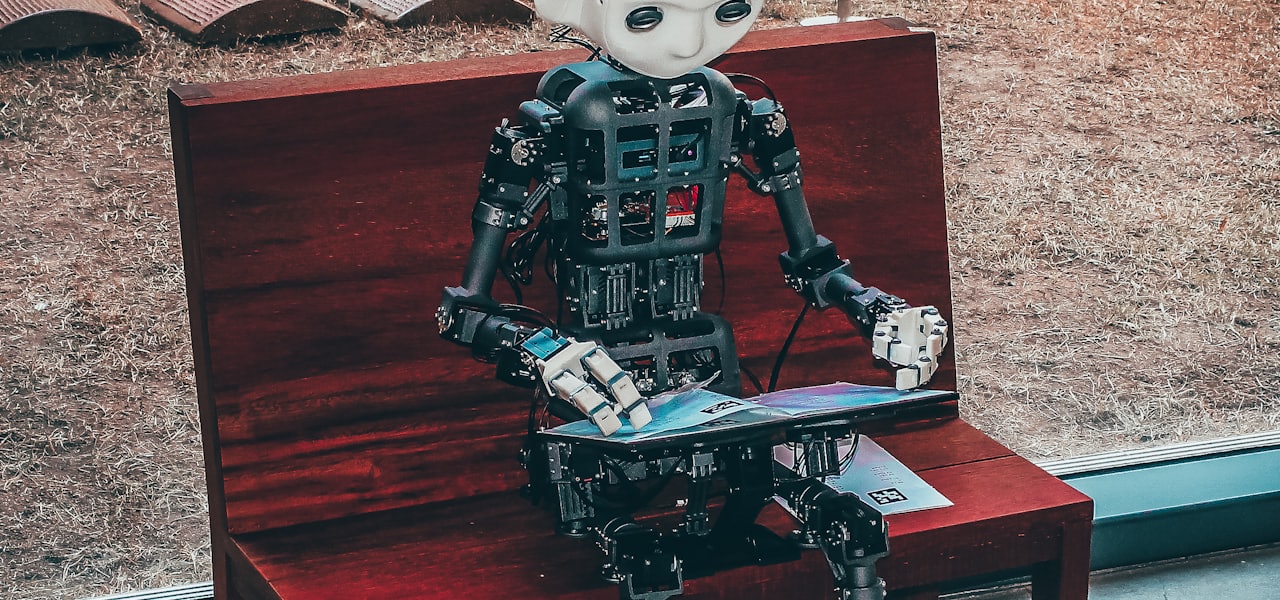
The blocks world is a planning domain in artificial intelligence. It consists of a set of wooden blocks of various shapes and colors sitting on a table. The goal is to build one or more vertical stacks of blocks. Only one block may be moved at a time: it may either be placed on the table or placed atop another block. Because of this, any blocks that are, at a given time, under another block cannot be moved. Moreover, some kinds of blocks cannot have other blocks stacked on top of them. The simplicity of this toy world lends itself readily to classical symbolic artificial intelligence approaches, in which the world is modeled as a set of abstract symbols which may be reasoned about. == Motivation == Artificial Intelligence can be researched in theory and with practical applications. The problem with most practical applications is that the engineers don't know how to program an AI system. Instead of rejecting the challenge at all the idea is to invent an easy to solve domain which is called a toy problem. Toy problems were invented with the aim to program an AI which can solve it. The blocks world domain is an example of a toy problem. Its major advantage over more realistic AI applications is that many algorithms and software programs are available which can handle the situation. This allows comparing different theories against each other. In its basic form, the blocks world problem consists of cubes of the same size which have all the color black. A mechanical robot arm has to pick and place the cubes. More complicated derivatives of the problem consist of cubes of different sizes, shapes and colors. From an algorithmic perspective, blocks world is an NP-hard search and planning problem. The task is to bring the system from an initial state into a goal state. Automated planning and scheduling problems are usually described in the Planning Domain Definition Language (PDDL) notation which is an AI planning language for symbolic manipulation tasks. If something was formulated in the PDDL notation, it is called a domain. Therefore, the task of stacking blocks is a blocks world domain which stands in contrast to other planning problems like the dock worker robot domain and the monkey and banana problem. == Theses/projects which took place in a blocks world == Terry Winograd's SHRDLU Patrick Winston's Learning Structural Descriptions from Examples and Copy Demo Gerald Jay Sussman's Sussman anomaly Decision problem (Gupta and Nau, 1992): Given a starting Blocks World, an ending Blocks World, and an integer L > 0, is there a way to move the blocks to change the starting position to the ending position with L or less steps? This decision problem is NP-hard.