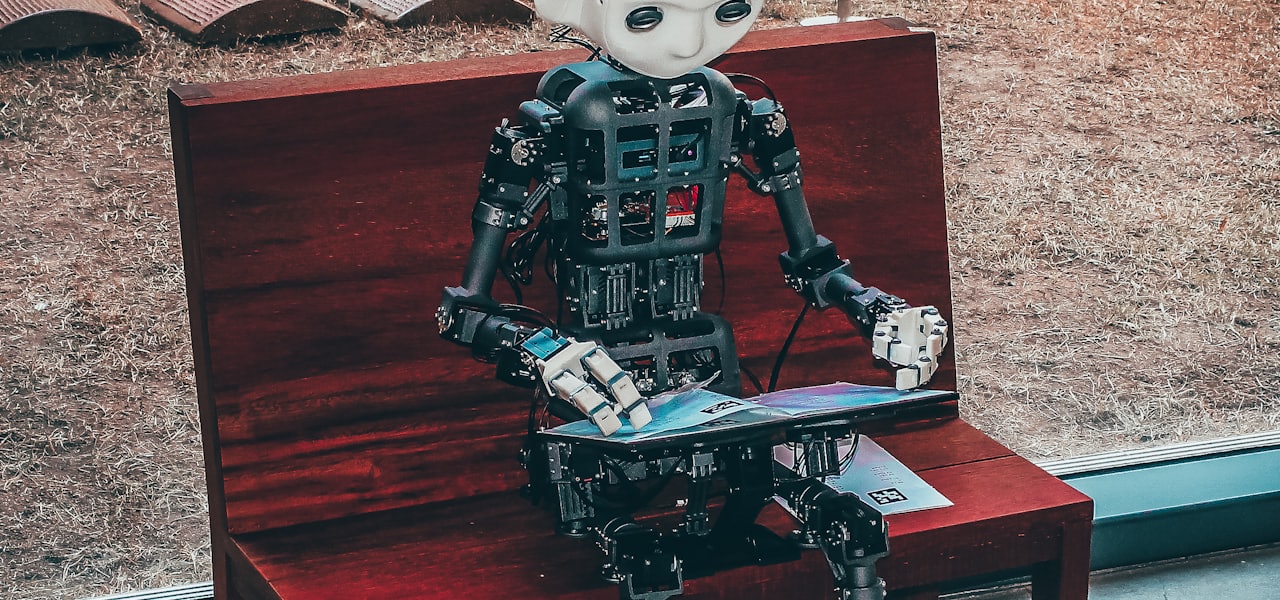
Source criticism (or information evaluation) is the process of evaluating an information source, i.e.: a document, a person, a speech, a fingerprint, a photo, an observation, or anything used in order to obtain knowledge. In relation to a given purpose, a given information source may be more or less valid, reliable or relevant. Broadly, "source criticism" is the interdisciplinary study of how information sources are evaluated for given tasks. == Meaning == Problems in translation: The Danish word kildekritik, like the Norwegian word kildekritikk and the Swedish word källkritik, derived from the German Quellenkritik and is closely associated with the German historian Leopold von Ranke (1795–1886). Historian Wolfgang Hardtwig wrote: His [Ranke's] first work Geschichte der romanischen und germanischen Völker von 1494–1514 (History of the Latin and Teutonic Nations from 1494 to 1514) (1824) was a great success. It already showed some of the basic characteristics of his conception of Europe, and was of historiographical importance particularly because Ranke made an exemplary critical analysis of his sources in a separate volume, Zur Kritik neuerer Geschichtsschreiber (On the Critical Methods of Recent Historians). In this work he raised the method of textual criticism used in the late eighteenth century, particularly in classical philology to the standard method of scientific historical writing. (Hardtwig, 2001, p. 12739) Historical theorist Chris Lorenz wrote: The larger part of the nineteenth and twentieth centuries would be dominated by the research-oriented conception of historical method of the so-called Historical School in Germany, led by historians as Leopold Ranke and Berthold Niebuhr. Their conception of history, long been regarded as the beginning of modern, 'scientific' history, harked back to the 'narrow' conception of historical method, limiting the methodical character of history to source criticism. (Lorenz, 2001) In the early 21st century, source criticism is a growing field in, among other fields, library and information science. In this context source criticism is studied from a broader perspective than just, for example, history, classical philology, or biblical studies (but there, too, it has more recently received new attention). == Principles == The following principles are from two Scandinavian textbooks on source criticism, written by the historians Olden-Jørgensen (1998) and Thurén (1997): Human sources may be relics (e.g. a fingerprint) or narratives (e.g. a statement or a letter). Relics are more credible sources than narratives. A given source may be forged or corrupted; strong indications of the originality of the source increases its reliability. The closer a source is to the event which it purports to describe, the more one can trust it to give an accurate description of what really happened A primary source is more reliable than a secondary source, which in turn is more reliable than a tertiary source and so on. If a number of independent sources contain the same message, the credibility of the message is strongly increased. The tendency of a source is its motivation for providing some kind of bias. Tendencies should be minimized or supplemented with opposite motivations. If it can be demonstrated that the witness (or source) has no direct interest in creating bias, the credibility of the message is increased. Two other principles are: Knowledge of source criticism cannot substitute for subject knowledge: "Because each source teaches you more and more about your subject, you will be able to judge with ever-increasing precision the usefulness and value of any prospective source. In other words, the more you know about the subject, the more precisely you can identify what you must still find out". (Bazerman, 1995, p. 304). The reliability of a given source is relative to the questions put to it. "The empirical case study showed that most people find it difficult to assess questions of cognitive authority and media credibility in a general sense, for example, by comparing the overall credibility of newspapers and the Internet. Thus these assessments tend to be situationally sensitive. Newspapers, television and the Internet were frequently used as sources of orienting information, but their credibility varied depending on the actual topic at hand" (Savolainen, 2007). The following questions are often good ones to ask about any source according to the American Library Association (1994) and Engeldinger (1988): How was the source located? What type of source is it? Who is the author and what are the qualifications of the author in regard to the topic that is discussed? When was the information published? In which country was it published? What is the reputation of the publisher? Does the source show a particular cultural or political bias? For literary sources complementing criteria are: Does the source contain a bibliography? Has the material been reviewed by a group of peers, or has it been edited? How does the article/book compare with similar articles/books? == Levels of generality == Some principles of source criticism are universal, other principles are specific for certain kinds of information sources. There is today no consensus about the similarities and differences between source criticism in the natural science and humanities. Logical positivism claimed that all fields of knowledge were based on the same principles. Much of the criticism of logical positivism claimed that positivism is the basis of the sciences, whereas hermeneutics is the basis of the humanities. This was, for example, the position of Jürgen Habermas. A newer position, in accordance with, among others, Hans-Georg Gadamer and Thomas Kuhn, understands both science and humanities as determined by researchers' preunderstanding and paradigms. Hermeneutics is thus a universal theory. The difference is, however, that the sources of the humanities are themselves products of human interests and preunderstanding, whereas the sources of the natural sciences are not. Humanities are thus "doubly hermeneutic". Natural scientists, however, are also using human products (such as scientific papers) which are products of preunderstanding (and can lead to, for example, academic fraud). == Contributing fields == === Epistemology === Epistemological theories are the basic theories about how knowledge is obtained and are thus the most general theories about how to evaluate information sources. Empiricism evaluates sources by considering the observations (or sensations) on which they are based. Sources without basis in experience are not seen as valid. Rationalism provides low priority to sources based on observations. In order to be meaningful, observations must be explained by clear ideas or concepts. It is the logical structure and the well definedness that is in focus in evaluating information sources from the rationalist point of view. Historicism evaluates information sources on the basis of their reflection of their sociocultural context and their theoretical development. Pragmatism evaluate sources on the basis of how their values and usefulness to accomplish certain outcomes. Pragmatism is skeptical about claimed neutral information sources. The evaluation of knowledge or information sources cannot be more certain than is the construction of knowledge. If one accepts the principle of fallibilism then one also has to accept that source criticism can never 100% verify knowledge claims. As discussed in the next section, source criticism is intimately linked to scientific methods. The presence of fallacies of argument in sources is another kind of philosophical criterion for evaluating sources. Fallacies are presented by Walton (1998). Among the fallacies are the ad hominem fallacy (the use of personal attack to try to undermine or refute a person's argument) and the straw man fallacy (when one arguer misrepresents another's position to make it appear less plausible than it really is, in order more easily to criticize or refute it.) === Research methodology === Research methods are methods used to produce scholarly knowledge. The methods that are relevant for producing knowledge are also relevant for evaluating knowledge. An example of a book that turns methodology upside-down and uses it to evaluate produced knowledge is Katzer; Cook & Crouch (1998). === Science studies === Studies of quality evaluation processes such as peer review, book reviews and of the normative criteria used in evaluation of scientific and scholarly research. Another field is the study of scientific misconduct. Harris (1979) provides a case study of how a famous experiment in psychology, Little Albert, has been distorted throughout the history of psychology, starting with the author (Watson) himself, general textbook authors, behavior therapists, and a prominent learning theorist. Harris proposes possible causes for these distortions and analyzes the Albert study as an ex
Photoanalysis
Photoanalysis (or photo analysis) refers to the study of pictures to compile various types of data, for example, to measure the size distribution of virtually anything that can be captured by photo. Photoanalysis technology has changed the way mines and mills quantify fragmented material. Images are an effective way to document conditions before, after, and even during blasting activities. The technology is advancing at a high rate, and lenses, storage media memory, light sensitivity and resolution have been improving steadily. Today's digital cameras and camcorders include high-resolution optics, compact size, automatic time and date stamps, good battery life, shutters to freeze motion, and computers to autofocus and eliminate jitter using image stabilization. == Mining == Photoanalysis in mining operations can provide an automated system that forewarns a company of potential problems with materials, leading to economies and reduced damage caused from over-sized materials. It can also help determine the effectiveness of blasts. A company can use this technology to monitor materials moving on a conveyor belt in an underground environment, to measure piles left over from a blast, and even measure the amount of material being carried by dump trucks or vessels to a destination. Photoanalysis is being used on SAG mills worldwide to control the size of rock being crushed. Companies are using this technology to determine the size of particles being processed in the SAG Mill.[1] Archived 2009-05-23 at the Wayback Machine Having oversize material entering the SAG mill makes an operation less efficient, costing companies money in electrical and maintenance costs. Photoanalysis technology can eliminate unwanted material before it enters the mill, keeping rock crushing costs low. == Forestry == Wood chip size can affect the overall quality of a product. With automated photoanalysis systems, companies can remove any unwanted wrong-size particles without stopping their mill process. Photoanalysis can affect how efficiently forestry companies operate. In mills worldwide, photoanalysis technology is improving the use of lumber products, cutting back on the amount of trees being used to operate, and saving companies money through quality control optimization.[2] With the current downturn in the North American forestry industry, operators are looking at making their mills more efficient and effective when processing materials. Photoanalysis technology helps identify any weaknesses in the process by continuously monitoring different sections of an operation. == Agriculture == Agricultural companies can, using photoanalysis, monitor conveyor belts of food without contaminating the product by touching it. Other benefits of photoanalysis systems include: Automated removal of any unwanted material on food conveyor Improved quality control for the most important parts of the agricultural process Pinpoint accuracy that helps the efficiency and effectiveness of product handling techniques The importance of photoanalysis technology is being noticed by the agricultural industry as it identifies any unwanted materials going through the process. In an example, if a mouse is on a conveyor of corn, photoanalysis technology would be able to identify the unwanted object and remove it before it contaminates the whole process. == Origins of photoanalysis technology == Photoanalysis technology was created by using the Waterloo Image Enhancement Process in the 1980s. After further development of the imaging process with explosives producer DuPont, engineers Tom Palangio and Takis Katsabanis began selling photoanalysis software commercially. They later renamed the process WipFrag, standing for Waterloo Image Process Fragmentation Today, photoanalysis technology has evolved into stabilized and portable systems that can automatically capture and analyze results instantly. Thousands of these products are currently being used around the world to measure fragmented material. == Photoanalysis equipment photos == == Fragmentation analysis == Fragmentation analysis is becoming a popular term in mining, agricultural and forestry industries. With the majority of money in these industries directed towards the proper sizing of materials, companies are using fragmentation analysis to determine various factors within an operation.[3] The two main ways a company keeps track of fragmented material are through manual and automated sieving procedures. Manual sieving involves extracting a sample of material to analyze the size distribution. The results can be tabulated within two days. Automated sieving is an advanced way of sieving materials running through a process. Without having to extract the material, photoanalysis can take place, allowing for immediate results with pinpoint accuracy. == Blast Fragmentation Software == Operators are using fragmentation analysis to determine the effectiveness of various blasts. With automated sieving technology, workers can track the success of these blasts and receive instant results. Companies are using these results to determine what blasting method yielded the best results for their specific operation. The common variables associated with blast optimization are the provided Particle Size Distribution (PSD) from a shovel fragmentation system, geology including rock type and fracturing, and energy factor. By using photoanalysis the fragmented materials can be monitored, offering pinpoint accuracy and allowing mine operators to make adjustments to future blasting procedures. See Optical Granulometry to view the automated sieving process. == Pre-crushing analysis == Maintenance costs can be significantly reduced if an operation focuses on the fragmentation of the particles passing through their process. Automated sieving systems can detect and help remove any oversize material before it enters the crusher and causes maintenance problems. It also helps determine the effectiveness of the mining process prior to crushing; the sizing of material is always a critical part of operations in the mining, forestry and agricultural industries. Having an analysis taking place at every major point in an operation allows for the proper tracking of material being processed. Engineers can then determine what part of the process needs improving based solely on the size of material. == Post-crushing analysis == Measuring how effective industrial crushers are, can help save a company millions of dollars in energy costs on an annual basis. There are two components that affect a typical crusher: the size of the material inputted, and the speed at which the crusher is moving. If the user can find a perfect balance between these two components, the materials will be crushed to the right size in the shortest time possible. Meeting the material standards set by governments and large companies can be hard. Having a post-crushing analysis taking place ensures that no oversize material gets shipped; eliminating the chance of getting fined for not meeting industry specifications.
Snapshot isolation
In databases, and transaction processing (transaction management), snapshot isolation is a guarantee that all reads made in a transaction will see a consistent snapshot of the database (in practice it reads the last committed values that existed at the time it started), and the transaction itself will successfully commit only if no updates it has made conflict with any concurrent updates made since that snapshot. Snapshot isolation has been adopted by several major database management systems, such as InterBase, Firebird, Oracle, MySQL, PostgreSQL, SQL Anywhere, MongoDB and Microsoft SQL Server (2005 and later). The main reason for its adoption is that it allows better performance than serializability, yet still avoids most of the concurrency anomalies that serializability avoids (but not all). In practice snapshot isolation is implemented within multiversion concurrency control (MVCC), where generational values of each data item (versions) are maintained: MVCC is a common way to increase concurrency and performance by generating a new version of a database object each time the object is written, and allowing transactions' read operations of several last relevant versions (of each object). Snapshot isolation has been used to criticize the ANSI SQL-92 standard's definition of isolation levels, as it exhibits none of the "anomalies" that the SQL standard prohibited, yet is not serializable (the anomaly-free isolation level defined by ANSI). In spite of its distinction from serializability, snapshot isolation is sometimes referred to as serializable by Oracle. == Definition == A transaction executing under snapshot isolation appears to operate on a personal snapshot of the database, taken at the start of the transaction. When the transaction concludes, it will successfully commit only if the values updated by the transaction have not been changed externally since the snapshot was taken. Such a write–write conflict will cause the transaction to abort. In a write skew anomaly, two transactions (T1 and T2) concurrently read an overlapping data set (e.g. values V1 and V2), concurrently make disjoint updates (e.g. T1 updates V1, T2 updates V2), and finally concurrently commit, neither having seen the update performed by the other. Were the system serializable, such an anomaly would be impossible, as either T1 or T2 would have to occur "first", and be visible to the other. In contrast, snapshot isolation permits write skew anomalies. As a concrete example, imagine V1 and V2 are two balances held by a single person, Phil. The bank will allow either V1 or V2 to run a deficit, provided the total held in both is never negative (i.e. V1 + V2 ≥ 0). Both balances are currently $100. Phil initiates two transactions concurrently, T1 withdrawing $200 from V1, and T2 withdrawing $200 from V2. If the database guaranteed serializable transactions, the simplest way of coding T1 is to deduct $200 from V1, and then verify that V1 + V2 ≥ 0 still holds, aborting if not. T2 similarly deducts $200 from V2 and then verifies V1 + V2 ≥ 0. Since the transactions must serialize, either T1 happens first, leaving V1 = −$100, V2 = $100, and preventing T2 from succeeding (since V1 + (V2 − $200) is now −$200), or T2 happens first and similarly prevents T1 from committing. If the database is under snapshot isolation(MVCC), however, T1 and T2 operate on private snapshots of the database: each deducts $200 from an account, and then verifies that the new total is zero, using the other account value that held when the snapshot was taken. Since neither update conflicts, both commit successfully, leaving V1 = V2 = −$100, and V1 + V2 = −$200. Some systems built using multiversion concurrency control (MVCC) may support (only) snapshot isolation to allow transactions to proceed without worrying about concurrent operations, and more importantly without needing to re-verify all read operations when the transaction finally commits. This is convenient because MVCC maintains a series of recent history consistent states. The only information that must be stored during the transaction is a list of updates made, which can be scanned for conflicts fairly easily before being committed. However, MVCC systems (such as MarkLogic) will use locks to serialize writes together with MVCC to obtain some of the performance gains and still support the stronger "serializability" level of isolation. == Workarounds == Potential inconsistency problems arising from write skew anomalies can be fixed by adding (otherwise unnecessary) updates to the transactions in order to enforce the serializability property. Materialize the conflict Add a special conflict table, which both transactions update in order to create a direct write–write conflict. Promotion Have one transaction "update" a read-only location (replacing a value with the same value) in order to create a direct write–write conflict (or use an equivalent promotion, e.g. Oracle's SELECT FOR UPDATE). In the example above, we can materialize the conflict by adding a new table which makes the hidden constraint explicit, mapping each person to their total balance. Phil would start off with a total balance of $200, and each transaction would attempt to subtract $200 from this, creating a write–write conflict that would prevent the two from succeeding concurrently. However, this approach violates the normal form. Alternatively, we can promote one of the transaction's reads to a write. For instance, T2 could set V1 = V1, creating an artificial write–write conflict with T1 and, again, preventing the two from succeeding concurrently. This solution may not always be possible. In general, therefore, snapshot isolation puts some of the problem of maintaining non-trivial constraints onto the user, who may not appreciate either the potential pitfalls or the possible solutions. The upside to this transfer is better performance. == Terminology == Snapshot isolation is called "serializable" mode in Oracle and PostgreSQL versions prior to 9.1, which may cause confusion with the "real serializability" mode. There are arguments both for and against this decision; what is clear is that users must be aware of the distinction to avoid possible undesired anomalous behavior in their database system logic. == History == Snapshot isolation arose from work on multiversion concurrency control databases, where multiple versions of the database are maintained concurrently to allow readers to execute without colliding with writers. Such a system allows a natural definition and implementation of such an isolation level. InterBase, later owned by Borland, was acknowledged to provide SI rather than full serializability in version 4, and likely permitted write-skew anomalies since its first release in 1985. Unfortunately, the ANSI SQL-92 standard was written with a lock-based database in mind, and hence is rather vague when applied to MVCC systems. Berenson et al. wrote a paper in 1995 critiquing the SQL standard, and cited snapshot isolation as an example of an isolation level that did not exhibit the standard anomalies described in the ANSI SQL-92 standard, yet still had anomalous behaviour when compared with serializable transactions. In 2008, Cahill et al. showed that write-skew anomalies could be prevented by detecting and aborting "dangerous" triplets of concurrent transactions. This implementation of serializability is well-suited to multiversion concurrency control databases, and has been adopted in PostgreSQL 9.1, where it is known as Serializable Snapshot Isolation (SSI). When used consistently, this eliminates the need for the above workarounds. The downside over snapshot isolation is an increase in aborted transactions. This can perform better or worse than snapshot isolation with the above workarounds, depending on workload.
Texture filtering
In computer graphics, texture filtering or texture smoothing is the method used to determine the texture color for a texture mapped pixel, using the colors of nearby texels (ie. pixels of the texture). Filtering describes how a texture is applied at many different shapes, size, angles and scales. Depending on the chosen filter algorithm, the result will show varying degrees of blurriness, detail, spatial aliasing, temporal aliasing and blocking. Depending on the circumstances, filtering can be performed in software (such as a software rendering package) or in hardware, eg. with either real time or GPU accelerated rendering circuits, or in a mixture of both. For most common interactive graphical applications, modern texture filtering is performed by dedicated hardware which optimizes memory access through memory cacheing and pre-fetch, and implements a selection of algorithms available to the user and developer. There are two main categories of texture filtering: magnification filtering and minification filtering. Depending on the situation, texture filtering is either a type of reconstruction filter where sparse data is interpolated to fill gaps (magnification), or a type of anti-aliasing (AA) where texture samples exist at a higher frequency than required for the sample frequency needed for texture fill (minification). There are many methods of texture filtering, which make different trade-offs between computational complexity, memory bandwidth and image quality. == The need for filtering == During the texture mapping process for any arbitrary 3D surface, a texture lookup takes place to find out where on the texture each pixel center falls. For texture-mapped polygonal surfaces composed of triangles typical of most surfaces in 3D games and movies, every pixel (or subordinate pixel sample) of that surface will be associated with some triangle(s) and a set of barycentric coordinates, which are used to provide a position within a texture. Such a position may not lie perfectly on the "pixel grid," necessitating some function to account for these cases. In other words, since the textured surface may be at an arbitrary distance and orientation relative to the viewer, one pixel does not usually correspond directly to one texel. Some form of filtering has to be applied to determine the best color for the pixel. Insufficient or incorrect filtering will show up in the image as artifacts (errors in the image), such as 'blockiness', jaggies, or shimmering. There can be different types of correspondence between a pixel and the texel/texels it represents on the screen. These depend on the position of the textured surface relative to the viewer, and different forms of filtering are needed in each case. Given a square texture mapped on to a square surface in the world, at some viewing distance the size of one screen pixel is exactly the same as one texel. Closer than that, the texels are larger than screen pixels, and need to be scaled up appropriately — a process known as texture magnification. Farther away, each texel is smaller than a pixel, and so one pixel covers multiple texels. In this case an appropriate color has to be picked based on the covered texels, via texture minification. Graphics APIs such as OpenGL allow the programmer to set different choices for minification and magnification filters. Note that even in the case where the pixels and texels are exactly the same size, one pixel will not necessarily match up exactly to one texel. It may be misaligned or rotated, and cover parts of up to four neighboring texels. Hence some form of filtering is still required. == Mipmapping == Mipmapping is a standard technique used to save some of the filtering work needed during texture minification. It is also highly beneficial for cache coherency - without it the memory access pattern during sampling from distant textures will exhibit extremely poor locality, adversely affecting performance even if no filtering is performed. During texture magnification, the number of texels that need to be looked up for any pixel is always four or fewer; during minification, however, as the textured polygon moves farther away potentially the entire texture might fall into a single pixel. This would necessitate reading all of its texels and combining their values to correctly determine the pixel color, a prohibitively expensive operation. Mipmapping avoids this by prefiltering the texture and storing it in smaller sizes down to a single pixel. As the textured surface moves farther away, the texture being applied switches to the prefiltered smaller size. Different sizes of the mipmap are referred to as 'levels', with Level 0 being the largest size (used closest to the viewer), and increasing levels used at increasing distances. == Filtering methods == This section lists the most common texture filtering methods, in increasing order of computational cost and image quality. === Nearest-neighbor interpolation === Nearest-neighbor interpolation is the simplest and crudest filtering method — it simply uses the color of the texel closest to the pixel center for the pixel color. While simple, this results in a large number of artifacts - texture 'blockiness' during magnification, and aliasing and shimmering during minification. This method is fast during magnification but during minification the stride through memory becomes arbitrarily large and it can often be less efficient than MIP-mapping due to the lack of spatially coherent texture access and cache-line reuse. === Nearest-neighbor with mipmapping === This method still uses nearest neighbor interpolation, but adds mipmapping — first the nearest mipmap level is chosen according to distance, then the nearest texel center is sampled to get the pixel color. This reduces the aliasing and shimmering significantly during minification but does not eliminate it entirely. In doing so it improves texture memory access and cache-line reuse through avoiding arbitrarily large access strides through texture memory during rasterization. This does not help with blockiness during magnification as each magnified texel will still appear as a large rectangle. === Linear mipmap filtering === Less commonly used, OpenGL and other APIs support nearest-neighbor sampling from individual mipmaps whilst linearly interpolating the two nearest mipmaps relevant to the sample. === Bilinear filtering === In Bilinear filtering, the four nearest texels to the pixel center are sampled (at the closest mipmap level), and their colors are combined by weighted average according to distance. This removes the 'blockiness' seen during magnification, as there is now a smooth gradient of color change from one texel to the next, instead of an abrupt jump as the pixel center crosses the texel boundary. Bilinear filtering for magnification filtering is common. When used for minification it is often used with mipmapping; though it can be used without, it would suffer the same aliasing and shimmering problems as nearest-neighbor filtering when minified too much. For modest minification ratios, however, it can be used as an inexpensive hardware accelerated weighted texture supersample. The Nintendo 64 used an unusual version of bilinear filtering where only three pixels are used known as 3-point texture filtering, instead of four due to hardware optimization concerns. This introduces a noticeable "triangulation bias" in some textures. === Trilinear filtering === Trilinear filtering is a remedy to a common artifact seen in mipmapped bilinearly filtered images: an abrupt and very noticeable change in quality at boundaries where the renderer switches from one mipmap level to the next. Trilinear filtering solves this by doing a texture lookup and bilinear filtering on the two closest mipmap levels (one higher and one lower quality), and then linearly interpolating the results. This results in a smooth degradation of texture quality as distance from the viewer increases, rather than a series of sudden drops. Of course, closer than Level 0 there is only one mipmap level available, and the algorithm reverts to bilinear filtering. === Anisotropic filtering === Anisotropic filtering is the highest quality filtering available in current consumer 3D graphics cards. Simpler, "isotropic" techniques use only square mipmaps which are then interpolated using bi– or trilinear filtering. (Isotropic means same in all directions, and hence is used to describe a system in which all the maps are squares rather than rectangles or other quadrilaterals.) When a surface is at a high angle relative to the camera, the fill area for a texture will not be approximately square. Consider the common case of a floor in a game: the fill area is far wider than it is tall. In this case, none of the square maps are a good fit. The result is blurriness and/or shimmering, depending on how the fit is chosen. Anisotropic filtering corrects this by sampling the texture as a non-square shape. The goal is
TiDB
TiDB (; "Ti" stands for Titanium) is an open-source NewSQL database that supports Hybrid Transactional and Analytical Processing (HTAP) workloads. Designed to be MySQL compatible, it is developed and supported primarily by PingCAP and licensed under Apache 2.0. It is also available as a paid product. TiDB drew its initial design inspiration from Google's Spanner and F1 papers. == Release history == See all TiDB release notes. On December 19, 2024, TiDB 8.5 GA was released. On May 24, 2024, TiDB 8.1 GA was released. On December 1, 2023, TiDB 7.5 GA was released. On May 31, 2023, TiDB 7.1 GA was released. On April 7, 2022, TiDB 6.0 GA was released. On April 7, 2021 TiDB 5.0 GA was released. On May 28, 2020, TiDB 4.0 GA was released. On June 28, 2019, TiDB 3.0 GA was released. On April 27, 2018, TiDB 2.0 GA was released. On October 16, 2017, TiDB 1.0 GA was released. == Main features == === Horizontal scalability === TiDB can expand both SQL processing and storage capacity by adding new nodes. === MySQL compatibility === TiDB acts like it is a MySQL 8.0 server to applications. A user can continue to use all of the existing MySQL client libraries. Because TiDB's SQL processing layer is built from scratch, it is not a MySQL fork. === Distributed transactions with strong consistency === TiDB internally shards a table into small range-based chunks that are referred to as "Regions". Each Region defaults to approximately 100 MB in size, and TiDB uses a two-phase commit internally to ensure that regions are maintained in a transactionally consistent way. === Cloud native === TiDB is designed to work in the cloud. The storage layer of TiDB, called TiKV, became a Cloud Native Computing Foundation (CNCF) member project in August 2018, as a Sandbox level project, and became an incubation-level hosted project in May 2019. TiKV graduated from CNCF in September 2020. === Real-time HTAP === TiDB can support both online transaction processing (OLTP) and online analytical processing (OLAP) workloads. TiDB has two storage engines: TiKV, a rowstore, and TiFlash, a columnstore. === High availability === TiDB uses the Raft consensus algorithm to ensure that data is available and replicated throughout storage in Raft groups. In the event of failure, a Raft group will automatically elect a new leader for the failed member, and self-heal the TiDB cluster. === Vector Search === TiDB has a vector data type and vector indexes. This allows TiDB to be used as Vector database in AI Retrieval-augmented generation applications. == Deployment methods == === Kubernetes with Operator === TiDB can be deployed in a Kubernetes-enabled cloud environment by using TiDB Operator. An Operator is a method of packaging, deploying, and managing a Kubernetes application. It is designed for running stateful workloads and was first introduced by CoreOS in 2016. TiDB Operator was originally developed by PingCAP and open-sourced in August, 2018. TiDB Operator can be used to deploy TiDB on a laptop, Google Cloud Platform’s Google Kubernetes Engine, and Amazon Web Services’ Elastic Container Service for Kubernetes. === TiUP === TiDB 4.0 introduces TiUP, a cluster operation and maintenance tool. It helps users quickly install and configure a TiDB cluster with a few commands. == Tools == TiDB has a series of open-source tools built around it to help with data replication and migration for existing MySQL and MariaDB users. === TiDB Data Migration (DM) === TiDB Data Migration (DM) is suited for replicating data from already sharded MySQL or MariaDB tables to TiDB. A common use case of DM is to connect MySQL or MariaDB tables to TiDB, treating TiDB almost as a slave, then directly run analytical workloads on this TiDB cluster in near real-time. === Backup & Restore === Backup & Restore (BR) is a distributed backup and restore tool for TiDB cluster data. === Dumpling === Dumpling is a data export tool that exports data stored in TiDB or MySQL. It lets users make logical full backups or full dumps from TiDB or MySQL. === TiDB Lightning === TiDB Lightning is a tool that supports high speed full-import of a large MySQL dump into a new TiDB cluster. This tool is used to populate an initially empty TiDB cluster with much data, in order to speed up testing or production migration. The import speed improvement is achieved by parsing SQL statements into key-value pairs, then directly generate Sorted String Table (SST) files to RocksDB. === TiCDC === TiCDC is a change data capture tool which streams data from TiDB to other systems like Apache Kafka.
Class activation mapping
Class activation mapping methods are explainable AI (XAI) techniques used to visualize the regions of an input image that are the most relevant for a particular task, especially image classification, in convolutional neural networks (CNNs). These methods generate heatmaps by weighting the feature maps from a convolutional layer according to their relevance to the target class. In the field of artificial intelligence, generically defined as "the effort to automate intellectual tasks normally performed by humans", machine learning and deep learning were created. They both use statistical and computational methods to learn patterns from data, reducing the need for manually coded rules. Machine learning models are trained on input data and the known respective answers, learning the underlying patterns or structures present in the data. Traditional Machine learning algorithms employ manually designed feature sets, posing a direct link between machine learning designers and employed features. Deep learning is a subfield of machine learning, based on the concept of successive layers of representation, in which the data is progressively unfolded in different ways, to extract relevant and informative patterns in data analysis. Deep learning algorithms are defined as feature learning algorithms automatically learning hierarchical feature representations from raw data, extracting increasingly abstract features through multiple layers. CNNs are a specific architecture of deep learning models, designed to process spatially structured data, such as images, exploiting a series of convolution, non-linear activation and pooling operations to extract relevant features, contained in the so-called feature maps from input data. CNNs have demonstrated to be highly effective in a variety of computer vision and image processing tasks. CNNs (and deep learning models more broadly) are described as black boxes due to their complex and non-transparent internal layers of representation. The need for clearer indications on its internal working and decision-making process gave birth to XAI techniques. Among the proposed XAI techniques for computer vision tasks, Class activation mapping methods can show which pixels in an input image are important to the predicted logit for a class of interest, in a classification task. Class activation mapping methods were originally developed for class-discriminative scenarios to visualize which parts of the input image influenced the classification decision, namely to visually highlight the regions of those feature maps that contribute most strongly to the prediction of a given class. More advanced versions of these methods are not limited to image classification tasks, but have been extended also to several vision-related tasks, such as object detection, image captioning, visual question answering and image segmentation. == Background == The following methods laid the groundwork for the class activation maps approaches, forming the conceptual basis of using gradients to highlight class-discriminative regions. === Class model visualization and saliency maps for convolutional neural networks === The class model visualization and image-specific saliency maps approaches have been presented in the foundational work "Deep Inside Convolutional Networks: Visualising Image Classification Models and Saliency Maps" by Karen Simonyan, Andrea Vedaldi, and Andrew Zisserman and it generalizes the deconvnet method by Zeiler and Fergus. Class model visualization synthesizes an artificial input image that strongly activates the output neurons associated with a target class. Given a trained, fixed model, this method starts with a zero-initialized image, backpropagates the gradients from the class score to the image pixels, updates the image pixels increasing the specific class scores and it repeats the pixel updating process, showing an encoded (idealized version) prototype of the class of interest. Image-specific class saliency visualization method provides a visual explanation by highlighting the most relevant pixels in an image for predicting a certain class C of interest. This is done by computing the gradient of the class score with respect to the input image, I 0 , {\displaystyle I_{0},} w = ∂ S C ∂ I | I 0 {\displaystyle w=\left.{\frac {\partial S_{C}}{\partial I}}\right|_{I_{0}}} approximating the model locally (around I 0 {\displaystyle I_{0}} ) as linear, using a first-order Taylor expansion: S C ( I ) ≈ w C T I + b {\displaystyle S_{C}(I)\approx w_{C}^{T}I+b} . The magnitude of w C {\displaystyle w_{C}} , the gradient, indicates the importancy of the pixels: larger gradients suggest greater influence on the prediction. Once the gradient is known, the saliency map is defined as the maximum absolute gradient across the color channels: M i j = m a x C | ∂ S C ∂ I i j C | {\displaystyle M_{ij}=max_{C}\left|{\frac {\partial S_{C}}{\partial I_{ij}^{C}}}\right|} resulting in an saliency map (i.e. heatmap). === Guided backpropagation === The concept of guided backpropagation can be traced for the first time in the paper by Springenberg et al. "Striving For Simplicity: The All Convolutional Net" and also this method builds upon the work by Zeiler and Fergus "Visualizing and Understanding Convolutional Networks". Guided backpropagation core is to understand what a CNN is learning, by visualizing the patterns that activate more strongly individual neurons (or filters), in architectures which do not rely on max-pooling layer. When propagating gradients back through a rectified linear unit (ReLU), guided backpropagation passes the gradient if and only if the input to the ReLU was positive (forward pass) and the output gradient is positive (backward signal), tackling both inactive neurons, negative gradients and suppressing the noise. The result displays sharper, high-resolution visualizations of what each neuron is responding to. Guided backpropagation represents a simple and practical method for model interpretability, helping understand how and where neural networks detect semantic concepts across layers. Moreover, it can be applied to any network architecture, due to its working principle. == Base versions == Class activation mapping and gradient-weighted class activation mapping are the original and most widely used methods for visual explanations in convolutional neural networks. These methods serve as the foundation for many later developments in explainable AI. Notation: In this article, the symbols i and j represent integer indices that disappear inside sums or averages, while x and y are the continuous (or up-sampled integer) coordinates of the final heat-map that is plotted. === Class activation mapping (CAM) === Class activation mapping (CAM) was the first, and the original, version of CAM methods, and it gave the name to the whole category. The approach was firstly introduced by Zhou et al. in their seminal work "Learning Deep Features for Discriminative Localization". This approach achieves class-specific heatmaps by modifying image classification CNN architectures, replacing fully-connected layers with convolutional layers and a final global average pooling layer. Its main scope is to localize and highlight discriminative regions of an input image that a CNN uses to identify a particular class, without needing explicit bounding box annotations. ==== Global average pooling (GAP) ==== Global average pooling (GAP) represents the key element in the original CAM approach. It is a dimensionality reduction technique and, similarly to other pooling layers, it allows the downsampling of the feature maps, calculating representative values for a specific region of the feature map. The particularity of GAP is that it calculates a single value for an entire feature map, significantly reducing the model dimensions. ==== Mathematical description ==== The mathematical description considers as its key the combination of convolutional and GAP layers. In CAM, it is mandatory to have the GAP layer after the last convolutional layer and before the final linear classifier layer. This last element of the architecture connects the output logits (the network predictions) y C {\displaystyle y^{C}} , to the GAP values, with its respective fine-tuned weights, w k C {\displaystyle w_{k}^{C}} . Considering A k {\displaystyle A^{k}} as the last feature maps of the last convolutional layer, GAP produces one value for each feature map, by averaging all the matrix elements (i, j) of the feature map: F k = 1 m n ∑ i = 1 m ∑ j = 1 n A i j k {\displaystyle F^{k}={\frac {1}{mn}}\sum _{i=1}^{m}\sum _{j=1}^{n}A_{ij}^{k}} with A k = [ A 11 k A 12 k ⋯ A 1 n k A 21 k A 22 k ⋯ A 2 n k ⋮ ⋮ ⋱ ⋮ A m 1 k A m 2 k ⋯ A m n k ] = { A i j k ∣ 1 ≤ i ≤ m , 1 ≤ j ≤ n } {\displaystyle A^{k}={\begin{bmatrix}A_{11}^{k}&A_{12}^{k}&\cdots &A_{1n}^{k}\\A_{21}^{k}&A_{22}^{k}&\cdots &A_{2n}^{k}\\\vdots &\vdots &\ddots &\vdots \\A_{m1}^{k}&A_{m2}^{k}&\cdots &A_{mn}^{k}\end{bmatrix}}=\left\{A_{
Reflection (computer graphics)
Reflection in computer graphics is used to render reflective objects like mirrors and shiny surfaces. Accurate reflections are commonly computed using ray tracing whereas approximate reflections can usually be computed faster by using simpler methods such as environment mapping. Reflections on shiny surfaces like wood or tile can add to the photorealistic effects of a 3D rendering. == Approaches to reflection rendering == For rendering environment reflections there exist many techniques that differ in precision, computational and implementation complexity. Combination of these techniques are also possible. Image order rendering algorithms based on tracing rays of light, such as ray tracing or path tracing, typically compute accurate reflections on general surfaces, including multiple reflections and self reflections. However these algorithms are generally still too computationally expensive for real time rendering (even though specialized HW exists, such as Nvidia RTX) and require a different rendering approach from typically used rasterization. Reflections on planar surfaces, such as planar mirrors or water surfaces, can be computed simply and accurately in real time with two pass rendering — one for the viewer, one for the view in the mirror, usually with the help of stencil buffer. Some older video games used a trick to achieve this effect with one pass rendering by putting the whole mirrored scene behind a transparent plane representing the mirror. Reflections on non-planar (curved) surfaces are more challenging for real time rendering. Main approaches that are used include: Environment mapping (e.g. cube mapping): a technique that has been widely used e.g. in video games, offering reflection approximation that's mostly sufficient to the eye, but lacking self-reflections and requiring pre-rendering of the environment map. The precision can be increased by using a spatial array of environment maps instead of just one. It is also possible to generate cube map reflections in real time, at the cost of memory and computational requirements. Screen space reflections (SSR): a more expensive technique that traces rays come from pixel data.This requires the data of surface normal and either depth buffer (local space) or position buffer (world space).The disadvantage is that objects not captured in the rendered frame cannot appear in the reflections, which results in unresolved and or false intersections causing artefacts such as reflection vanishment and virtual image. SSR was originally introduced as Real Time Local Reflections in CryENGINE 3. == Types of reflection == Polished - A polished reflection is an undisturbed reflection, like a mirror or chrome surface. Blurry - A blurry reflection means that tiny random bumps, or microfacets, on the surface of the material causes the reflection to be blurry. Metallic - A reflection is metallic if the highlights and reflections retain the color of the reflective object. Glossy - This term can be misused: sometimes, it is a setting which is the opposite of blurry (e.g. when "glossiness" has a low value, the reflection is blurry). Sometimes the term is used as a synonym for "blurred reflection". Glossy used in this context means that the reflection is actually blurred. === Polished or mirror reflection === Mirrors are usually almost 100% reflective. === Metallic reflection === Normal (nonmetallic) objects reflect light and colors in the original color of the object being reflected. Metallic objects reflect lights and colors altered by the color of the metallic object itself. === Blurry reflection === Many materials are imperfect reflectors, where the reflections are blurred to various degrees due to surface roughness that scatters the rays of the reflections. === Glossy reflection === Fully glossy reflection, shows highlights from light sources, but does not show a clear reflection from objects. == Examples of reflections == === Wet floor reflections === The wet floor effect is a graphic effects technique popular in conjunction with Web 2.0 style pages, particularly in logos. The effect can be done manually or created with an auxiliary tool which can be installed to create the effect automatically. Unlike a standard computer reflection (and the Java water effect popular in first-generation web graphics), the wet floor effect involves a gradient and often a slant in the reflection, so that the mirrored image appears to be hovering over or resting on a wet floor.