An electronic lab notebook or electronic laboratory notebook (ELN) is a computer program designed to replace paper laboratory notebooks. Lab notebooks in general are used by scientists, engineers, and technicians to document research, experiments, and procedures performed in a laboratory. A lab notebook is often maintained to be a legal document and may be used in a court of law as evidence. Similar to an inventor's notebook, the lab notebook is also often referred to in patent prosecution and intellectual property litigation. Electronic lab notebooks offer many benefits to the user as well as organizations; they are easier to search upon, simplify data copying and backups, and support collaboration amongst many users. ELNs can have fine-grained access controls, and can be more secure than their paper counterparts. They also allow the direct incorporation of data from instruments, replacing the practice of printing out data to be stapled into a paper notebook. == Types == ELNs can be divided into two categories: "Specific ELNs" contain features designed to work with specific applications, scientific instrumentation or data types. "Cross-disciplinary ELNs" or "Generic ELNs" are designed to support access to all data and information that needs to be recorded in a lab notebook. Lab Platforms that combine an ELN, LIMS, and scientific data management together, all-in-one configurable software environment. Solutions range from specialized programs designed from the ground up for use as an ELN, to modifications or direct use of more general programs. Examples of using more general software as an ELN include using OpenWetWare, a MediaWiki install (running the same software that Wikipedia uses), WordPress, or the use of general note taking software such as OneNote as an ELN. ELN's come in many different forms. They can be standalone programs, use a client-server model, or be entirely web-based. Some use a lab-notebook approach, others resemble a blog. ELNs are embracing artificial intelligence and LLM technology to provide scientific AI chat assistants. A good many variations on the "ELN" acronym have appeared. Differences between systems with different names are often subtle, with considerable functional overlap between them. Examples include "ERN" (Electronic Research Notebook), "ERMS" (Electronic Resource (or Research or Records) Management System (or Software) and SDMS (Scientific Data (or Document) Management System (or Software). Ultimately, these types of systems all strive to do the same thing: Capture, record, centralize and protect scientific data in a way that is highly searchable, historically accurate, and legally stringent, and which also promotes secure collaboration, greater efficiency, reduced mistakes and lowered total research costs. == Objectives == A good electronic laboratory notebook should offer a secure environment to protect the integrity of both data and process, whilst also affording the flexibility to adopt new processes or changes to existing processes without recourse to further software development. The package architecture should be a modular design, so as to offer the benefit of minimizing validation costs of any subsequent changes that you may wish to make in the future as your needs change. A good electronic laboratory notebook should be an "out of the box" solution that, as standard, has fully configurable forms to comply with the requirements of regulated analytical groups through to a sophisticated ELN for inclusion of structures, spectra, chromatograms, pictures, text, etc. where a preconfigured form is less appropriate. All data within the system may be stored in a database (e.g. MySQL, MS-SQL, Oracle) and be fully searchable. The system should enable data to be collected, stored and retrieved through any combination of forms or ELN that best meets the requirements of the user. The application should enable secure forms to be generated that accept laboratory data input via PCs and/or laptops / palmtops, and should be directly linked to electronic devices such as laboratory balances, pH meters, etc. Networked or wireless communications should be accommodated for by the package which will allow data to be interrogated, tabulated, checked, approved, stored and archived to comply with the latest regulatory guidance and legislation. A system should also include a scheduling option for routine procedures such as equipment qualification and study related timelines. It should include configurable qualification requirements to automatically verify that instruments have been cleaned and calibrated within a specified time period, that reagents have been quality-checked and have not expired, and that workers are trained and authorized to use the equipment and perform the procedures. == Regulatory and legal aspects == The laboratory accreditation criteria found in the ISO 17025 standard needs to be considered for the protection and computer backup of electronic records. These criteria can be found specifically in clause 4.13.1.4 of the standard. Electronic lab notebooks used for development or research in regulated industries, such as medical devices or pharmaceuticals, are expected to comply with FDA regulations related to software validation. The purpose of the regulations is to ensure the integrity of the entries in terms of time, authorship, and content. Unlike ELNs for patent protection, FDA is not concerned with patent interference proceedings, but is concerned with avoidance of falsification. Typical provisions related to software validation are included in the medical device regulations at 21 CFR 820 (et seq.) and Title 21 CFR Part 11. Essentially, the requirements are that the software has been designed and implemented to be suitable for its intended purposes. Evidence to show that this is the case is often provided by a Software Requirements Specification (SRS) setting forth the intended uses and the needs that the ELN will meet; one or more testing protocols that, when followed, demonstrate that the ELN meets the requirements of the specification and that the requirements are satisfied under worst-case conditions. Security, audit trails, prevention of unauthorized changes without substantial collusion of otherwise independent personnel (i.e., those having no interest in the content of the ELN such as independent quality unit personnel) and similar tests are fundamental. Finally, one or more reports demonstrating the results of the testing in accordance with the predefined protocols are required prior to release of the ELN software for use. If the reports show that the software failed to satisfy any of the SRS requirements, then corrective and preventive action ("CAPA") must be undertaken and documented. Such CAPA may extend to minor software revisions, or changes in architecture or major revisions. CAPA activities need to be documented as well. Aside from the requirements to follow such steps for regulated industry, such an approach is generally a good practice in terms of development and release of any software to assure its quality and fitness for use. There are standards related to software development and testing that can be applied (see ref.).
Automated Lip Reading
Automated Lip Reading (ALR) is a software technology developed by speech recognition expert Frank Hubner. A video image of a person talking can be analysed by the software. The shapes made by the lips can be examined and then turned into sounds. The sounds are compared to a dictionary to create matches to the words being spoken. The technology was used successfully to analyse silent home movie footage of Adolf Hitler taken by Eva Braun at their Bavarian retreat Berghof. The video, with words, was included in a documentary titled "Hitler's Private World", Revealed Studios, 2006 Source: New Technology catches Hitler off guard
Blocknots
Blocknots were random sequences of numbers contained in a book and organized by numbered rows and columns and were used as additives in the reciphering of Soviet Union codes, during World War II. The Blocknot consisted of a booklet of fifty sheets of 5-figure random additive, 100 additive groups to a sheet. No sheet was used more than once, thus the blocknots were in effect a form of one-time pad. The Soviet Unions highest grade ciphers that were used in the East, were the 5-figure codebook enciphered with the Blocknot book, and were generally considered unbreakable. == Technical Description == Blocknots were distributed centrally from an office in Moscow. Every Blocknot contained 5-figure groups in a number of sheets, for the enciphering of 5-figure messages. The encipherment was effected by applying additives taken from the pad, of which 50-100 5-figure groups appeared. Each pad had a 5-figure number and each sheet had a 2-figure number running consecutively. There were 5 different types of Blocknots, in two different categories The Individual in which each table of random numbers was used only once. The General in which each page of the Blocknot was valid for one day. The security of the additive sequence rested on the choice of different starting points for each message. In 5-figure messages, the blocknot was one of the first 10 Groups in the message. Its position changed at long intervals, but was always easy to re-identify. The Russians differentiated between three types of blocks: The 3-block, DRIERBLOCK. I-block for Individual Block: 50 pages, additive read off in one direction only. The messages could be used and read only between 2 wireless telegraphy stations on one net. The 6-block, SECHSERBLOCK. Z-block for Circular Block: 30 pages, additive read off in either direction. The messages could be used and read, between all W/T stations in a net. The 2-block, ZWEIERBLOCK. OS-block. Used only in traffic from lower to higher formations. Two other types were used, in lower echelons. Notblock: Used in an emergency. Blocknot used for passing on traffic. The distribution of Blocknots was carried out centrally from Moscow to Army Groups then to Armies. The Army was responsible for their distribution throughout the lower levels of the army down to company level. Independent units took their cipher material with them. Occasionally the same blocknot was distributed to two units on different parts of the front, which enabled Depth to be established. Records of all Blocknots used were kept in Berlin and when a repeat was noticed a BLOCKNOT ANGEBOT message was sent out to all German Signals units, to indicate that it may have been possible to break the code using it. There was no certainty in this. A cryptanalyst with the General der Nachrichtenaufklärung stated while being interrogated by TICOM: It seems that depths of up to 8 were established at the beginning of the Russian Campaign but that no 5-figure code was broken after May 1943 German cryptanalysts who were prisoners of war stated under interrogation, that each of the figures 0 to 9 were placed en clair usually within the first ten groups of the text or sometimes at the end. One indicator was the Blocknot number and the consisted of two random figures, the figure representing the type, and the remaining two, the page of the Blocknot being used. In long messages, 000000 was placed in the message when the end of a page had been reached. == Chi number == The Chi-number was the serial numbering of all 5-figure messages passing through the hands of the Cipher Officer, starting on the first of January and ending on thirty-first December of the current year. It always appeared as the last group in an intercepted message, e.g. 00001 on the 1st January, or when the unit was newly set up. The progression of Chi-numbers was carefully observed and recorded in the form of a graph. A Russian corps had about 10 5-figure messages per day, and Army about 20-30 and a Front about 60–100. After only a relatively short time, the individual curves separated sharply and the type of formation could be recognized by the height of the Chi-number alone. == Monitoring == Blocknots were tracked in a card index, that was maintained by the Signal Intelligence Evaluation Centre (NAAS). The NAAS functionality included evaluation and traffic analysis, cryptanalysis, collation and dissemination of intelligence. The card index, which was one amongst several Card Indexes. A careful recording and study of blocks provided the positive clues in the identification and tracking of formations using 5-figure ciphers. The index was subdivided into two files: Search card index, contained all blocknots and chi-numbers whether or not they were known. Unit card index, contained only known Block and Chi-numbers. Inspector Berger, who was the chief cryptanalyst of NAAS 1 stated that the two files formed: The most important and surest instruments for identifying Russian radio nets, known to him. The Blocknots were also used in the Stationary Intercept Company (Feste), the military unit that were designed to work at a lower level to the NAAS, at the Army level and were semi-motorized, and closer to the front. The Feste used the Blocknot value along with several other parameters to build a network diagram. The network diagram was studied extensively, as part of a 6-stage process, that involved several departments within the Feste. The outcome was a metric which determined the most interesting circuit for traffic monitoring, and least interesting, where monitoring of traffic should cease. == Analysis == Johannes Marquart was a mathematician and cryptanalyst who initially worked for Inspectorate 7/VI and later led Referat Ia of Group IV of the General der Nachrichtenaufklärung. Marquart was assigned the study of the Soviet Union Blocknot traffic. Marquart and his unit conducted extensive research in an attempt to discover the method by which they were produced. All the counts which they made, however, failed to reveal any non-random characteristics in the design of the tables, and while they thought the Blocknots must have been generated by machine, they were never able to draw any concrete deductions as a result of their research. == Example == The Soviet 3rd Guard Tank Army transmits a 5-figure message with the Blocknot of 37581 (one of the first 10 groups in the message). On the same day the Block 37582 was used by the same formation. The next day 37583 appeared. Thereafter, for a period, the Army was not heard by German Wireless telegraphy intercept operators, as it was maintaining wireless silence. After a few days, an unidentified net with the Blocknot 37588 is picked up. This message net is claimed, because of the proximity of the blocks (88/83) to be the 3rd Guard Tank Army. The missing Blocknots 84-87 were presumably used in telegraphic, telephonic or courier communications. The Chi number provides confirmation of the first assumption, based on proximity of blocknots in most cases.
Human rights and encryption
Human rights and encryption refers to the ways in which digital encryption affects human rights. Encryption can be used as both a detriment and a boon to human rights; for example, encryption can be used to enforce digital rights management for video games. This kind of video game licensing can render software unusable long term and represents the erosion of consumer rights. At the same time, encryption is fundamental part of internet security. Asymmetrical encryption is used extensively online for authentication, providing users confidence their internet traffic is not being misdirected. Encryption is also used to obfuscate information as it travels from end-to-end over the internet, preventing eavesdropping and tampering. Encryption can also provide anonymity, which is an important consideration for freedom of expression. Despite its drawbacks, encryption is essential for a free, open, and trustworthy internet. == Background == === Human rights === Human rights are moral principles or norms for human behaviour that are regularly protected as legal rights in national and international law. They are commonly understood as inalienable, fundamental rights "to which a person is inherently entitled simply because they are a human being". Those rights are "inherent in all human beings" regardless of their nationality, location, language, religion, ethnic origin, or any other status. They are applicable everywhere and at every time and are universal and egalitarian. === Cryptography === Cryptography is a long-standing subfield of both mathematics and computer science. It can generally be defined as "the protection of information and computation using mathematical techniques." Encryption and cryptography are closely interlinked, although "cryptography" has a broader meaning. For example, a digital signature is "cryptography", but not technically "encryption". == Overview == Under international human rights law, freedom of expression is recognized as a human right under Article 19 of the Universal Declaration of Human Rights (UDHR) and the International Covenant on Civil and Political Rights (ICCPR). In Article 19 of the UDHR states that "everyone shall have the right to hold opinions without interference" and "everyone shall have the right to freedom of expression; this right shall include freedom to seek, receive and impart information and ideas of all kinds, regardless of frontiers, either orally, in writing or in print, in the form of art, or through any other media of his choice". Since the 1970s, the availability of digital computing and the invention of public-key cryptography have made encryption more widely available. (Previously, encryption techniques were the domain of nation-state actors.) Cryptographic techniques are also used to protect the anonymity of communicating actors and privacy more generally. The availability and use of encryption continue to lead to complex, important, and highly contentious legal policy debates. Some government agencies have made statements or proposals to lessen such usage and deployment due to hurdles it presents for government access. The rise of commercial end-to-end encryption services have pushed towards more debates around the use of encryption and the legal status of cryptography in general. Encryption, as defined above, is a set of cryptographic techniques to protect information. The normative value of encryption, however, is not fixed but varies with the type and purpose of the cryptographic methods used. Traditionally, encryption (cipher) techniques were used to ensure the confidentiality of communications and prevent access to information and communications by others and intended recipients. Cryptography can also ensure the authenticity of communicating parties and the integrity of communications contents, providing a key ingredient for enabling trust in the digital environment. There is a growing awareness within human rights organizations that encryption plays an important role in realizing a free, open, and trustworthy Internet. UN Special Rapporteur on the promotion and protection of the right to freedom of opinion and expression David Kaye observed, during the Human Rights Council in June 2015, that encryption and anonymity deserve a protected status under the rights to privacy and freedom of expression: "Encryption and anonymity, today's leading vehicles for online security, provide individuals with a means to protect their privacy, empowering them to browse, read, develop and share opinions and information without interference and enabling journalists, civil society organizations, members of ethnic or religious groups, those persecuted because of their sexual orientation or gender identity, activists, scholars, artists and others to exercise the rights to freedom of opinion and expression." == Encryption in media and communication == In the context of media and communication, two types of encryption in media and communication can be distinguished: It could be used as a result of the choice of a service provider or deployed by Internet users. Client-side encryption tools and technologies are relevant for marginalized communities, journalists and other online media actors practicing journalism as a way of protecting their rights. It could prevent unauthorized third party access, but the service provider implementing it would still have access to the relevant user data. End-to-end encryption is an encryption technique that refers to encryption that also prevents service providers themselves from having access to the user's communications. The implementation of these forms of encryption has sparked the most debate since the start of the 21st century. === Service providers deployed techniques to prevent unauthorized third-party access. === Among the most widely deployed cryptographic techniques is the securitization of communications channel between internet users and specific service providers from man-in-the-middle attacks, access by unauthorized third parties. Given the breadth of nuances involved, these cryptographic techniques must be run jointly by both the service user and the service provider in order to work properly. They require service providers, including online news publisher(s) or social network(s), to actively implement them into service design. Users cannot deploy these techniques unilaterally; their deployment is contingent on active participation by the service provider. The TLS protocol, which becomes visible to the normal internet user through the HTTPS header, is widely used for securing online commerce, e-government services and health applications as well as devices that make up networked infrastructures, e.g., routers, cameras. However, although the standard has been around since 1990, the wider spread and evolution of the technology has been slow. As with other cryptographic methods and protocols, the practical challenges related to proper, secure and (wider) deployment are significant and have to be considered. Many service providers still do not implement TLS or do not implement it well. In the context of wireless communications, the use of cryptographic techniques that protect communications from third parties are also important. Different standards have been developed to protect wireless communications: 2G, 3G and 4G standards for communication between mobile phones, base stations and base stations controllers; standards to protect communications between mobile devices and wireless routers ('WLAN'); and standards for local computer networks. One common weakness in these designs is that the transmission points of the wireless communication can access all communications e.g., the telecommunications provider. This vulnerability is exacerbated when wireless protocols only authenticate user devices, but not the wireless access point. Whether the data is stored on a device, or on a local server as in the cloud, there is also a distinction between 'at rest'. Given the vulnerability of cellphones to theft for instance, particular attention may be given to limiting service provided access. This does not exclude the situation that the service provider discloses this information to third parties like other commercial entities or governments. The user needs to trust the service provider to act in their interests. The possibility that a service provider is legally compelled to hand over user information or to interfere with particular communications with particular users, remains. === Privacy-enhancing Technologies === There are services that specifically market themselves with claims not to have access to the content of their users' communication. Service Providers can also take measures that restrict their ability to access information and communication, further increasing the protection of users against access to their information and communications. The integrity of these Privacy Enhancing Technologies (PETs), depends on delicate design decisions as well as the
Data thinking
Data Thinking is a framework that integrates data science with the design process. It combines computational thinking, statistical thinking, and domain-specific knowledge to guide the development of data-driven solutions in product development. The framework is used to explore, design, develop, and validate solutions, with a focus on user experience and data analytics, including data collection and interpretation The framework aims to apply data literacy and inform decision-making through data-driven insights. == Major components == According to "Computational thinking in the era of data science": Data thinking involves understanding that solutions require both data-driven and domain-knowledge-driven rules. Data thinking evaluates whether data accurately represents real-life scenarios and improves data collection where necessary. The framework highlights the importance of preserving domain-specific meaning during data analysis. Data thinking incorporates statistical and logical analysis to identify patterns and irregularities. Data thinking involves testing solutions in real-life contexts and iteratively improving models based on new data. The process requires evaluating problems from multiple abstraction levels and understanding the potential for biases in generalizations. == Major phases == === Strategic context and risk analysis === Analyzing the broader digital strategy and assessing risks and opportunities is a common step before beginning a project. Techniques like coolhunting, trend analysis, and scenario planning can be used to assist with this. === Ideation and exploration === In this phase, focus areas are identified, and use cases are developed by integrating organizational goals, user needs, and data requirements. Design thinking methods, such as personas and customer journey mapping, are applied. === Prototyping === A proof of concept is created to test feasibility and refine solutions through iterative evaluation to optimize for effective performance. === Implementation and monitoring === Solutions are tested and monitored for performance and continual improvement. == Implementing Data Thinking == The following resources explain more about data thinking and its applications: "Data Thinking: Framework for data-based solutions" by StackFuel "What is Data Thinking? A modern approach to designing a data strategy" by Mantel Group "Data Science Thinking" by SpringerLink These sources provide detailed insights into the methodology, phases, and benefits of adopting Data Thinking in organizational processes.
Brain technology
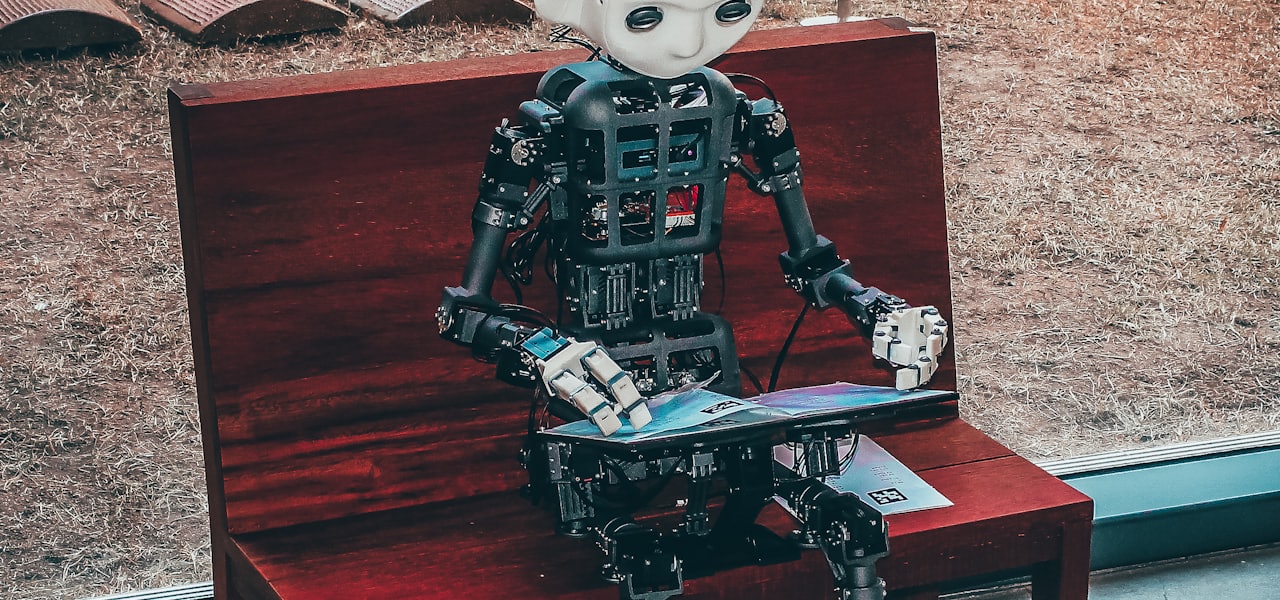
Brain technology, or self-learning know-how systems, defines a technology that employs latest findings in neuroscience. [see also neuro implants] The term was first introduced by the Artificial Intelligence Laboratory in Zurich, Switzerland, in the context of the Roboy project. Brain Technology can be employed in robots, know-how management systems and any other application with self-learning capabilities. In particular, Brain Technology applications allow the visualization of the underlying learning architecture often coined as "know-how maps". == Research and applications == The first demonstrations of BC in humans and animals took place in the 1960s when Grey Walter demonstrated use of non-invasively recorded encephalogram (EEG) signals from a human subject to control a slide projector (Graimann et al., 2010). Soon after Jacques J. Vidal coined the term brain–computer interface (BCI) in 1971, the Defense Advanced Research Projects Agency (DARPA) first starting funding brain–computer interface research and has since funded several brain–computer interface projects. That market is expected to reach a value of $1.72 billion by 2022. Brain–computer interfaces record brain activity, transmit the information out of the body, signal-process the data via algorithms, and convert them into command control signals. In 2012, a landmark study in Nature, led by pioneer Leigh Hochberg, MD, PhD, demonstrated that two people with tetraplegia were able to control robotic arms through thought when connected to the BrainGate neural interface system. The two participants were able to reach for and grasp objects in three-dimensional space, and one participant used the system to serve herself coffee for the first time since becoming paralyzed nearly 15 years prior. And in October 2020, two patients were able to wirelessly control an operating system to text, email, shop and bank using direct thought through the Stentrode brain computer interface (Journal of NeuroInterventional Surgery) in a study led by Thomas Oxley. This was the first time a brain–computer interface was implanted via the patient's blood vessels, eliminating the need for open brain surgery. Currently a number of groups are exploring a range of experimental devices using brain–computer interfaces, which have the potential to fundamentally change the way of life for patients with paralysis and a wide range of neurological disorders. These include: as Elon Musk, Facebook, and the University of California in San Francisco. The systems. This technology is also being explored as a neuromodulation device and may ultimately help diagnose and treat a range of brain pathologies, such as epilepsy and Parkinson's disease.
Social media marketing
Social media marketing is the use of social media platforms and websites to promote a product or service. Although the terms e-marketing and digital marketing are still dominant in academia, social media marketing is becoming more popular for practitioners and researchers. Social media platforms such as Facebook, LinkedIn, Instagram, and Twitter, among others, have built-in data analytics tools that companies can use to track the progress, success, and engagement of social media marketing campaigns. Companies address a range of stakeholders through social media marketing, including current and potential customers, current and potential employees, journalists, bloggers, and the general public. On a strategic level, social media marketing includes the management of a marketing campaign, governance, setting the scope (e.g. more active or passive use) and the establishment of a firm's desired social media "culture" and "tone". Firms that use social media marketing can allow customers and Internet users to post user-generated content (e.g., online comments, product reviews, etc.), also known as "earned media", rather than use marketer-prepared advertising copy. == Purposes and tactics == Social media may be employed in marketing as a communications tool that makes companies accessible to those who are interested in their product and visible to those who are not familiar with their products. It is used by companies to create buzz, learn from customers, and target them. Of the top 10 factors that correlate with a strong Google organic search, seven are social media-dependent. This means that if brands with little to no social media presence tend to show up less on Google searches. While platforms such as Twitter, Facebook and—in the past—Google+ have a larger number of monthly users, the visual media-sharing-based mobile platforms garner a higher interaction rate in comparison, and have registered the fastest growth, and have changed the ways in which consumers engage with brand content. Instagram has an interaction rate of 1.46% with an average of 130 million users monthly as opposed to Twitter, which has a .03% interaction rate with an average of 210 million monthly users. Unlike traditional media that are often cost-prohibitive to many companies, a social media strategy does not require significant financial investment. To this end, companies make use of platforms such as Facebook, Twitter, YouTube, TikTok and Instagram to reach audiences much wider than through traditional print, television, or radio advertisements alone at a fraction of the cost, as most social networking sites can be used at little or no cost (however, some websites charge companies for premium services). This has changed the ways that companies approach and interact with customers, as a substantial percentage of consumer interactions are now being carried out over online platforms with much higher visibility. Customers can post reviews of products and services, rate customer service, and ask questions or voice concerns directly to companies through social media platforms. According to Measuring Success, over 80% of consumers use the web to research products and services. Thus social media marketing is also used by businesses in order to build relationships of trust with consumers. To this aim, companies may hire personnel to specifically handle these social media interactions, who usually report under the title of online community managers. Handling these interactions in a satisfactory manner can result in an increase of consumer trust. To both this aim and to fix the public's perception of a company, three steps are taken in order to address consumer concerns: Identifying the extent of the social chatter Engaging the influencers to help Developing a proportional response == Strategies == === Passive approach === Social media can be a useful source of market information and a way to hear customers' perspectives. Blogs, content communities, and forums are platforms where individuals share their reviews and recommendations of brands, products, and services. Businesses are able to tap into and analyze customer voices and feedback generated in social media for marketing purposes. In this sense, social media is a relatively inexpensive source of market intelligence which can be used by marketers and managers to track and respond to consumer-identified problems and detect market opportunities. === Active approach === Social media can be used as a public relations tool, a direct marketing tool, and a communication channel to target very specific audiences, with social media influencers and social media personalities as effective customer engagement tools. This tactic is widely known as influencer marketing, which gives brands the opportunity to reach their target audience via a group of selected influencers advertising their product or service. Brands were projected to spend up to $15 billion on influencer marketing by 2022, per Business Insider Intelligence estimates, based on Mediakix data. The use of customer influencers, such as popular bloggers, can be an efficient and cost-effective method to launch new products or services. == Engagement == Engagement with the social web means that customers and stakeholders are active participants rather than passive spectators. An example of these are consumer advocacy groups and groups that criticize companies (e.g., lobby groups or advocacy organizations). The use of Social media in a business or political context allows people to express and share opinions about a company's products, services or business practices, or a government's actions. On social media, each participant becomes part of the marketing department (or a challenge to the marketing effort) as other customers read their comments or reviews. The effectiveness of social media marketing campaigns is dependent on the promotion of online engagement. With the advent of social media marketing, it has become increasingly important to gain customer interest in products and services, which can eventually be translated into buying behavior, or voting and donating behavior in a political context. New online marketing concepts of engagement and loyalty have emerged which aim to build customer participation and brand reputation. Engagement in social media for the purpose of a social media strategy is divided into two parts. The first is proactive, regular posting of new online content, which can be seen through digital photos, digital videos, text, and conversations. It is also represented through sharing of content and information from others via weblinks. The second part is reactive conversations, with social media users responding to those who reach out to others' social media profiles through comments or messages. == Campaigns == === Local businesses === Small businesses use social networking sites as a promotional technique. Businesses can follow individuals' social media usage in their local area and advertise specials and deals, which can be exclusive and in the form of "get a free drink with a copy of this tweet". This type of message encourages other locals to follow the business on their official websites in order to obtain the promotional deal. The business's brand visibility is enhanced in the process. Social networking sites are also used by small businesses to develop their own market research on new products and services. By encouraging their customers to give feedback on new product ideas, businesses can gain insights on whether or not a product may be accepted by their target market enough to merit full production. In addition, customers will feel the company has engaged them in the process of co-creation—the process in which the business uses customer feedback to create or modify a product or service to fill a need of the target market. Such feedback can be presented in various forms, such as surveys, contests, and polls. Social networking sites such as LinkedIn, also provide opportunities for small businesses to find candidates to fill staff positions. Review sites such as Yelp help small businesses build their reputation beyond brand visibility. Positive customer peer reviews help influence new prospects to purchase goods and services more than company advertising. == Benefits == Social Media Marketing allows companies to promote themselves to large, diverse audiences that could not be reached through traditional marketing such as phone and email-based advertising. Marketing on most social media platforms also comes at little to no cost, making it accessible to virtually any size business. Social Media Marketing accommodates personalized and direct marketing that targets specific demographics and markets. Companies can engage with customers directly, allowing them to obtain feedback and resolve issues almost immediately. Another advantage of social media marketing is that it's an ideal environment for a company to conduct market research. It can be used