Kruti is a multilingual AI agent and chatbot developed by the Indian company Ola Krutrim. It is designed to perform real-world tasks for users, such as booking taxis and ordering food, by integrating directly with various online services. It is notable for its ability to understand and respond in multiple Indian languages. Developed by a team founded by Bhavish Aggarwal, Kruti functions as an "agentic" AI, meaning it can reason, plan, and execute multi-step tasks to fulfill a user's request. The backend technology combines several open-source large language models with Ola's proprietary Krutrim V2 model. The system was developed to work primarily on smartphones, addressing the Indian market's specific needs, including language diversity and potential bandwidth constraints. Kruti was officially released in June 2025, replacing an earlier chatbot from the company that was also named Krutrim. Initially supporting 13 languages, the company plans to expand its capabilities to 22 Indian languages. == Background == Kruti is an improved version of Ola's Krutrim chatbot, which was first launched in 2023 and was intended to be replaced by Kruti. It was officially released on 12 June 2025 as an upgrade to passive chatbots, with support for text and voice in 13 Indian languages. As an agentic AI, it can execute tasks with customization and reasoning, providing adaptive answers based on user preferences and past interactions. Kruti is optimized for smartphone usage and designed to accommodate bandwidth constraints and usage patterns in India. To ensure scalability and cost-effective performance, it combines various open-source large language models with Ola's own Krutrim V2, which has 12 billion parameters. Its speech recognition is built to identify regional Indian languages, dialects, and accents. Due to its integration with numerous apps and services, Kruti is context-aware and can proactively complete tasks. Initially connected only with Ola ecosystem services, Krutrim intends to expand and incorporate various Indian services into Kruti, with the goal of adding services from Blinkit, Swiggy, and Uber with respective voice command support. On 20 June 2025, Krutrim acquired the AI platform BharatSah‘AI’yak to increase its involvement in government, education, and agriculture projects. This acquisition will allow Kruti to assist in broadening the scope of BharatSah'AI'yak's work on India-centric, vernacular retrieval-augmented generation AI bots. == Development == Kruti is designed to perform tasks with minimal user input, accepting documents, images, and text, without requiring users to switch between applications. Its agentic framework breaks queries into sub-tasks executed by multiple agents working sequentially or concurrently, with reported accuracy exceeding 90%. Kruti connects to company databases and APIs via the Model Context Protocol and presents responses as summaries, tables, or narratives adapted to user behaviour. The system supports payments via credit/debit cards and UPI. The underlying stack, which includes foundation models and AI training and inference systems, is intended to support adaptation across sectors such as healthcare, education, and finance. Ola Cabs and the Open Network for Digital Commerce have begun integrating Kruti into their platforms pending broader reliability testing.
Pose (computer vision)
In the fields of computing and computer vision, pose (or spatial pose) represents the position and the orientation of an object, each usually in three dimensions. Poses are often stored internally as transformation matrices. The term “pose” is largely synonymous with the term “transform”, but a transform may often include scale, whereas pose does not. In computer vision, the pose of an object is often estimated from camera input by the process of pose estimation. This information can then be used, for example, to allow a robot to manipulate an object or to avoid moving into the object based on its perceived position and orientation in the environment. Other applications include skeletal action recognition. == Pose estimation == The specific task of determining the pose of an object in an image (or stereo images, image sequence) is referred to as pose estimation. Pose estimation problems can be solved in different ways depending on the image sensor configuration, and choice of methodology. Three classes of methodologies can be distinguished: Analytic or geometric methods: Given that the image sensor (camera) is calibrated and the mapping from 3D points in the scene and 2D points in the image is known. If also the geometry of the object is known, it means that the projected image of the object on the camera image is a well-known function of the object's pose. Once a set of control points on the object, typically corners or other feature points, has been identified, it is then possible to solve the pose transformation from a set of equations which relate the 3D coordinates of the points with their 2D image coordinates. Algorithms that determine the pose of a point cloud with respect to another point cloud are known as point set registration algorithms, if the correspondences between points are not already known. Genetic algorithm methods: If the pose of an object does not have to be computed in real-time a genetic algorithm may be used. This approach is robust especially when the images are not perfectly calibrated. In this particular case, the pose represent the genetic representation and the error between the projection of the object control points with the image is the fitness function. Learning-based methods: These methods use artificial learning-based system which learn the mapping from 2D image features to pose transformation. In short, this means that a sufficiently large set of images of the object, in different poses, must be presented to the system during a learning phase. Once the learning phase is completed, the system should be able to present an estimate of the object's pose given an image of the object. == Camera pose ==
Feeding the Machine (book)
Feeding the Machine: The Hidden Human Labour Powering AI is a 2024 book by James Muldoon, Mark Graham and Callum Cant. == Writing == The authors developed the concept for the book while doing fieldwork studying data annotation in developing countries in East Africa. == Synopsis == The book examines the human input needed to develop and sustain AI ecosystems. == Reception == The book received positive reviews. Rosalie Waelen of Capital & Class gave it a mostly positive review. Tim Hornyak of Literary Review praised it. Kirkus Reviews called it "A sobering and timely—if sometimes distracted—study of AI.". Publishers Weekly gave the book a starred review, writing that "The grim real-life stories read like dystopian parables, such as the account of a European voice actor whose recordings were legally used without her consent to create an inexpensive synthetic clone whom she now competes with for business. Driven by striking reporting and finely observed profiles, this unsettles."
International Conference on Autonomous Agents and Multiagent Systems
The International Conference on Autonomous Agents and Multiagent Systems or AAMAS is the leading scientific conference for research in the areas of artificial intelligence, autonomous agents, and multiagent systems. It is annually organized by a non-profit organization called the International Foundation for Autonomous Agents and Multiagent Systems (IFAAMAS). == History == The International Conference on Autonomous Agents and Multiagent Systems (AAMAS) is a highly respected joint conference that provides a quality forum for discussing research in intelligent computational agents and their interactions. It is a merger of three major international conferences/workshops, namely the International Conference on Autonomous Agents (AGENTS), International Conference on Multi-Agent Systems (ICMAS), and International Workshop on Agent Theories, Architectures, and Languages (ATAL). ICMAS is itself a merger of three formative workshops, each with an attendance of fewer than 50 researchers. At a meeting during IJCAI-93 held in Chambery, France in August 1993, the leaders of the European Workshops on Modelling Autonomous Agents in a Multi-Agent World, the Asian MAAC Workshops, and the North American Distributed Artificial Intelligence Workshops (Victor Lesser, Michael N. Huhns, Les Gasser, Barbara Grosz, Nicholas Jennings, Michael Wooldridge, Gerhard Weiss, Mario Tokoro, and Toru Ishida) began the planning for a combined conference, which resulted in the first ICMAS in San Francisco, CA, USA in 1995, attended by more than 500 researchers. The AAMAS Conference is under the guidance and management of the International Foundation for Autonomous Agents and Multiagent Systems, which is incorporated as a 501(c)(3) non-profit organization in South Carolina, USA. == Current and previous conferences == 2024: Auckland, New Zealand (May 6-10) 2023: London, United Kingdom (May 29-June 1) 2022: Auckland, New Zealand (May 9–13) 2021: London, United Kingdom (May 3-May 7) 2020: Auckland, New Zealand (May 9–13) 2019: Montreal, Canada (May 13–17) 2018: Stockholm, Sweden (July 10–15) 2017: São Paulo, Brazil 2016: Singapore City, Singapore 2015: Istanbul, Turkey 2014: Paris, France 2013: Saint Paul, USA 2012: Valencia, Spain 2011: Taipei, Taiwan 2010: Toronto, Canada 2009: Budapest, Hungary 2008: Estoril, Portugal 2007: Honolulu, USA 2006: Hakodate, Japan 2005: Utrecht, The Netherlands 2004: New York, USA 2003: Melbourne, Australia 2002: Bologna, Italy == Activities == Besides the main program that consists of a main track, an industry and applications track, and a couple of special area tracks, AAMAS also hosts over 20 workshops (e.g., AOSE, COIN, DALT, ProMAS, to mention a few) and many tutorials. There is also a demonstration session and a doctoral symposium. Finally, each year AAMAS features a bunch of awards, most notably the IFAAMAS Influential Paper Award. It publishes proceedings which are available online.
Computer-assisted legal research
Computer-assisted legal research (CALR) or computer-based legal research is a mode of legal research that uses databases of court opinions, statutes, court documents, and secondary material. Electronic databases make large bodies of case law easily available. Databases also have additional benefits, such as Boolean searches, evaluating case authority, organizing cases by topic, and providing links to cited material. Databases are available through paid subscription or for free. Subscription-based services include Westlaw, LexisNexis, JustCite, HeinOnline, Bloomberg Law, Lex Intell, VLex and LexEur. As of 2015, the commercial market grossed $8 billion. Free services include OpenJurist, Google Scholar, AltLaw, Ravel Law, WIPO Lex, Law Delta and the databases of the Free Access to Law Movement. == Purposes == Computer-assisted legal research is undertaken by a variety of actors. It is taught as a topic in many law degrees and is used extensively by undergraduate and postgraduate law students in meeting the work requirements of their degree courses. Professors of Law rely on the digitization of primary and secondary sources of law when conducting their research and writing the material that they submit for publication. Professional lawyers rely on computer-assisted legal research in order to properly understand the status of the law and so to act effectively in the best interest of their client. They may also consult the text of case judgements and statutes specifically, as well as wider academic comment, in order to form the basis of (or response to) an appeal. The availability of legal information online differs by type, jurisdiction and subject matter. The types of information available include: Texts of statutes, statutory instruments, civil codes, etc. Explanatory notes and government publications relating to statutes and their operation Texts of governing documents such as constitutions and treaties Case judgements Journals on legal matters or legal theory Dictionaries and legal encyclopedia Legal texts and materials in the form of e-books Current affairs and market information Educational information on the law and its operation == Before the Internet == Prior to the advent and popularization of the World Wide Web, access to digital legal information was largely through the use of CD-ROMs, designed and sold by commercial organizations. Dial-up services were also available from the 1970s. As the use of the Internet spread in the early 1990s, companies such as LexisNexis and Westlaw incorporated Internet connectivity into their software packages. Browser-based legal information started to be published by Legal Information Institutes from 1992. == Publicly available information == The first effort to provide free computer access to legal information was made by two academics, Peter Martin and Tom Bruce, in 1992. Today, the Legal Information Institute freely publishes such resources as the text of the United States Constitution, judgements of the United States Supreme Court, and the text of the United States Code. The Australasian Legal Information Institute (AusLII) was established soon after in 1995. Other legal information institutes, such as those of Great Britain and Ireland (BAILII), Canada (CII) and South Africa (SAfLI) soon followed. LIIs were partially formalized in 2002 following the signing of the Declaration of Free Access to the Law, which has been signed by 54 countries. At the time of writing, the World Legal Information Institute contains in excess of 1800 databases from 123 jurisdictions. Many governments also publish legal information online. For example, UK legislation and statutory instruments have been publicly available online since 2010. Depending on the jurisdiction in question, the decisions of higher appellate courts may also be published online, either by the Legal Information Institute or by the court service directly. Sources of European Union Law are published for free by EUR-Lex in 23 languages, including judgments of the European Courts. Similarly, judgements of the European Court of Human Rights are published on its website.
Companion robot
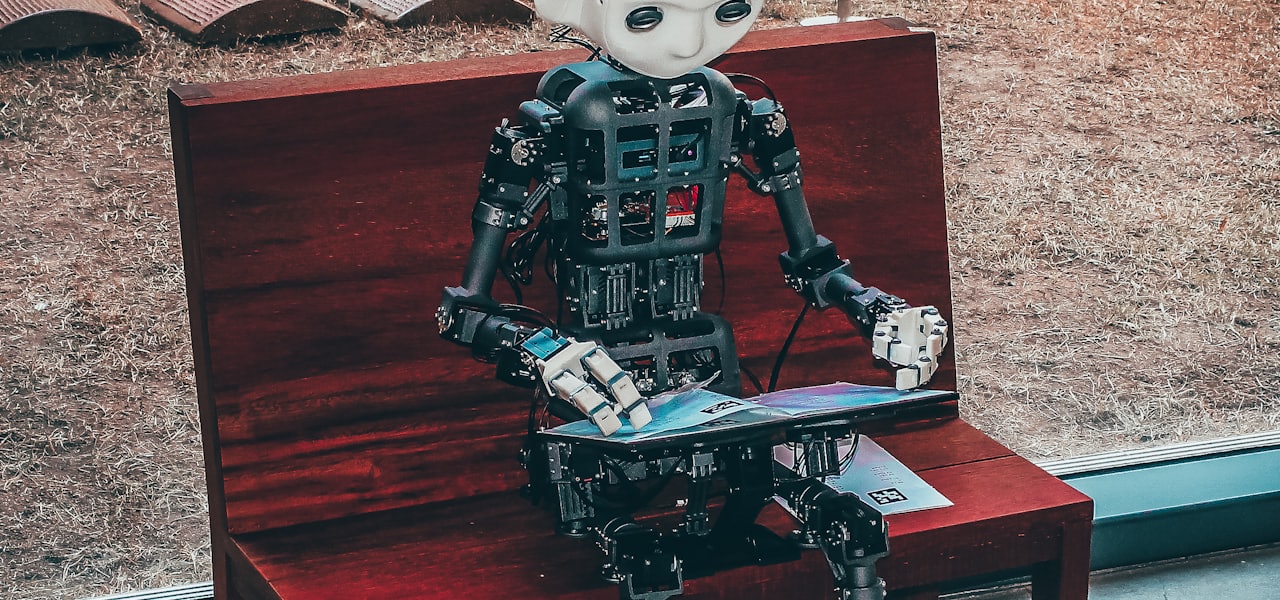
A companion robot is a robot created to create real or apparent companionship for human beings. Target markets for companion robots include the elderly and single children. Companions robots are expected to communicate with non-experts in a natural and intuitive way. They offer a variety of functions, such as monitoring the home remotely, communicating with people, or waking people up in the morning. Their aim is to perform a wide array of tasks including educational functions, home security, diary duties, entertainment and message delivery services, etc. The idea of companionship with robots has already existed on science fictions of 1970s, like R2-D2. Starting from the late 20th century, companion robots became a reality, mostly as robotic pets. Besides entertainment purposes, interactive robots were also introduced as a personal service robot for elderly care around 2000. == Characteristics == Companion robots try to interact with users. They gather information about users based on their interactions and yield feedback. This procedure varies slightly based on their specific roles. For example, social-companion robots make simple conversations, while pet-companion robots mimic being real pets. == Types == Companion robots can perform a variety of tasks and they are produced in a specialized manner according to their purpose or target audience in order to increase convenience and end user satisfaction. === Social companion robots === Social companion robots are designed to provide companionship and be a solution for unwanted solitude. They often mimic adult human, child or pet behaviours appealing to the user base. Robots which are specifically devised for simple conversations, conveying emotions and respond to user feelings fall under this category. === Assistive companion robots === Assistive companion robots are aimed at people who require constant care because of age, disability or rehabilitation purposes. Such robots can help disadvantaged users with their daily tasks, act as reminders (e.g., for regular medication) and facilitate mobility in everyday actions. Assistive companion robots reduce the intensity of labour that should be performed by caretakers, nurses and legal guardians. === Educational companion robots === Educational companion robots perform tutorship for students, regardless of their ages, and can teach desired subjects with activities tailored for the user such as interactive assignments and games. Rather than replacing teachers and instructors, educational companion robots are aides to them. === Therapeutic companion robots === Designed for individuals coping with stress (PTSD in severe cases), anxiety and loneliness; therapeutic companion robots support users' emotional and mental wellbeing. Such robots can be utilized in hospitals and care facilities as well as dwellings where the distressed user may need the most help. Therapeutic companion robots bear a vast resemblance to assistive companion robots to the extent of being a branch of them; the nuance between these two types of companion robots is that the former is for long-term/lifetime usage while the latter is mostly for the duration of the therapy received by the user. === Pet companion robots === Pet companion robots are for individuals who seek an alternative to live pets as live animals demand a considerable amount of care and may not be eligible for people with allergies. These robots aim to be perfect imitations of a pet while diminishing the chore aspect of having one. === Entertainment companion robots === Entertainment companion robots are designed solely for entertainment and can provide numerous ways of entertainment, ranging from dancing to playing games with the user. People who would appreciate an individual to have fun with are the main audience of such products. === Personal assistant robots === Personal assistant robots help people with daily tasks, management, scheduling, reminding etc. Their area of activity can be offices as well as homes and public spaces. === Sex robots === Sex robots are anthropomorphic robotic sex dolls that have human-like movement or behavior, and some degree of artificial intelligence. As of 2026, although elaborately instrumented sex dolls have been created by a number of inventors, no fully animated sex robots yet exist. Simple devices have been created which can speak, make facial expressions, or respond to touch. There is controversy as to whether developing them would be morally justifiable. In 2015, robot ethicist Kathleen Richardson called for a ban on the creation of anthropomorphic sex robots with concerns about normalizing relationships with machines and reinforcing female dehumanization. Questions about their ethics, effects, and possible legal regulations have been discussed since then. == Examples == There are several companion robot prototypes, and these include Paro, CompanionAble, and EmotiRob, among others. === Paro === Paro is a pet-type robot system developed by Japan's National Institute of Advanced Industrial Science and Technology (AIST). The robot, which looked like a small harp seal, was designed as a therapeutic tool for use in hospitals and nursing homes. The robot is programmed to cry for attention and respond to its name. Experiments showed that Paro facilitated elderly residents to communicate with each other, which led to psychological improvements. === CompanionAble === This robot is classified as an FP 7 EU project. It is built to "cooperate with Ambient Assistive Living environment". The autonomous device, which is also built to support the elderly, helps its owner interact with smart home environment as well as caregivers. The robot functions as a mobile friend, by which natural interaction is possible via speech and the touchscreen to detect and track people at home. === EmotiRob === EmotiRob is developed in a robotics project which is the continuity of the MAPH (Active Media For the Handicap) project in emotion synthesis. The aim of the project was to maintain emotional interaction with children. EmotiRob designed in a way that a child can hold it in a his/her arms and with which he/she could interact by talking to it, and then the robot would express itself through body postures or facial expressions. It has cognitive capabilities, which are further extended so that the robot can have a natural linguistic interaction with its owner through the DRAGON speech-recognition software developed by a company called NUANCE. Such interaction is expected to facilitate a child's cognitive development and develop new learning patterns. === LOVOT === Lovot is a Japanese company robot whose only purpose is "to make you happy". It features over 50 sensors that mimic the behavior of a human baby or small pet, a 360° camera with a microphone, the ability to distinguish humans from objects, neoteny eyes, and an internal warmth of 30° celsius. An interactive Lovot Café was opened in Japan October 3, 2020. === NICOBO === Nicobo was developed by Panasonic and was influenced by the loneliness of lockdowns created as a measure of the COVID-19 pandemic. It was designed to appear vulnerable, which creates empathy in its owners. Nicobo's name derives from the Japanese word for "smile". It wags its tail, engages in baby talk, and stays as a housemate. === Hyodol === Hyodol is an advanced care robot designed to support the elderly by reminding them to take their medications and monitoring their movements to keep their guardians informed. Additionally, this innovative robot can detect and respond to the emotional states of its elderly users, adding a layer of personalized care. Hyodol is designed with the appearance and speech style of a 7-year-old Korean grandchild, featuring a soft fabric exterior and user interaction methods such as striking the head or patting the back. It is equipped with various sensors and wireless communication technologies to collect and process data, supporting mobile apps and PC web monitoring systems for remote monitoring from anywhere. In South Korea, approximately 10,000 Hyodol robots are deployed to the homes of elderly individuals living alone, providing essential support and companionship. Local governments, including provincial and county offices, have embraced Hyodol as a solution to address social challenges stemming from the country's rapidly aging society.Furthermore, the robot is widely utilized in the treatment of dementia patients at a university hospital in Gangwon province. Hyodol was honored with the Mobile World Congress (MWC) Global Mobile Awards (GLOMO) in the "Best Mobile Innovation for Connected Health and Wellbeing" category on February 29, 2024. === Moxie === Moxie was a companion robot for autistic children developed by a company called Embodied. Although it had limited motion, it presented itself as a lifelike avatar. It was designed to help the children learn emotional cognition, using remotely hosted large language models to direct its respons
European Society for Fuzzy Logic and Technology
The European Society for Fuzzy Logic and Technology (EUSFLAT) is a scientific association with the aims to disseminate and promote fuzzy logic and related subjects (sometimes comprised under the collective terms soft computing or computational intelligence) and to provide a platform for exchange between scientists and engineers working in these fields. The society is both open for academic and industrial members. == History == EUSFLAT was founded in 1998 in Spain as the successor of the National Spanish Fuzzy Logic Society, ESTYLF, with the aim to open the society for members from other European countries. Since then, the society managed to attract a large share of members from outside Spain, and even beyond Europe, with the Spanish members still being the largest group inside EUSFLAT. For these historical reasons, the society is officially registered in Spain. == Conferences == Starting with 1999, EUSFLAT has been organizing its biannual conferences in odd years. Previous meetings: Palma de Mallorca, Balearic Islands, Spain, September 22–25, 1999 (jointly with National Spanish conference, ESTYLF) Leicester, United Kingdom, September 5–7, 2001 Zittau, Germany, September 10–12, 2003 Barcelona, Catalonia, Spain, September 7–9, 2005 (jointly with 11th Rencontres Francophones sur la Logique Floue et ses Applications) Ostrava, Czech Republic, September 11–14, 2007 Lisbon, Portugal, July 20–24, 2009 (jointly with 13th World Congress of the International Fuzzy Systems Association) Aix-les-Bains, France, July 18–22, 2011 (jointly with Les Rencontres Francophones sur la Logique Floue et ses Applications) Milan, Italy, September 11–13, 2013 Gijón, Spain, June, 30–3 July 2015 == Publications == EUSFLAT publishes the proceedings of its conferences in an open access manner. Until 2010, Mathware & Soft Computing was the official journal of EUSFLAT. On July 1, 2010, the International Journal of Computational Intelligence Systems (Atlantis Press, ISSN 1875-6891 (print) / ISSN 1875-6883 (on-line)) became the official journal of EUSFLAT. EUSFLAT publishes an electronic newsletter with three issues a year. == Presidents == EUSFLAT is led by the President, who is elected for a two-year period, and cannot serve for more than two consecutive periods. Francesc Esteva (1998–2011) Luis Magdalena (2001–2005) Ulrich Bodenhofer (2005–2009) Javier Montero (2009–2013) Gabriella Pasi (2013–present)